What Investors Should Ask Before a Commercial Appraisal in Oxford County
Commercial real estate in Oxford County sits at a practical crossroads. It is close enough to the GTA to feel the pull of big city capital, yet its rents, land prices, and tenant mix still reflect a regional economy of logistics, agri‑food, light manufacturing, and small professional services. If you are buying, refinancing, or repositioning a property in Woodstock, Ingersoll, Tillsonburg, or the rural townships, your appraisal is more than a formality for the lender. It is a truth test on your thesis, a check on risks you may have downplayed, and a negotiating tool that can either accelerate or stall your deal.
The best time to improve an appraisal outcome is before you order it. That means asking sharper questions of your commercial appraiser, aligning the scope of work with your real decision, and putting the right evidence on the table. I have seen investors lose weeks and leave six figures of value stranded simply because they treated the appraisal as a black box. With a few targeted questions and some pre‑work, you can keep control of the narrative and the timeline.
Why the conversation with your appraiser matters
In Ontario, most lenders rely on narrative appraisal reports prepared under the Canadian Uniform Standards of Professional Appraisal Practice, CUSPAP. These are not checklists or templates. They are reasoned opinions that rest on data quality, market judgment, and clearly defined scope. If you do not set that scope, it will be set for you, often by a cautious underwriter. That can mean a limited set of comparables, a hair‑cut on capitalization rates, or a highest and best use analysis that ignores a near‑term repositioning plan.
On one industrial building in Woodstock, a buyer believed the cap rate should be 6.25 percent because a GTA private fund paid that level for a similar footprint in Brantford. The appraiser applied 6.75 percent based on three Oxford County trades, and the value came in roughly 7 percent lower than the buyer expected. The investor later learned the Brantford deal involved a tenant with 11 years remaining and annual 3 percent escalations. The Woodstock tenant had three years left with flat rent. Had the investor briefed the appraiser upfront on tenant renewal probabilities and local rent delta, the reconciliation might have landed closer to 6.5 percent, which would have salvaged the loan proceeds target.
Small differences in assumptions do outsized damage. A 25 basis point move in cap rate on a 30,000 square foot industrial at 10 dollars net rent can swing value by 200,000 to 300,000 dollars. A 2 dollar discrepancy in projected net rent, multiplied by a five percent cap, can gap value by more than a million dollars. These are not rounding errors. They are the direct result of inputs you can influence with better questions and evidence.
What is distinctive about the Oxford County market
Investors who parachute in with GTA benchmarks are often surprised. Oxford County carries the weight of Highway 401 logistics, dairy and agri‑processing, and automotive suppliers. It also has a meaningful stock of older masonry industrial buildings with 12 to 18 foot clear heights, patchwork power upgrades, and variable loading. Office and retail skew toward small bay and service retail rather than trophy assets. Development land along key corridors changes hands on a wide range depending on servicing and timing.
You will see wide rent spreads across industrial product. A newer tilt‑up facility with 28 foot clear, LED lighting, ESFR sprinklers, and multiple truck level doors could lease at 12 to 15 dollars net per square foot, while a 1970s structure with low clear and a single drive‑in might struggle to command 8 to 10 dollars. Retail in Woodstock’s busy nodes may achieve 22 to 30 dollars net for prime small bays, while secondary streets in Tillsonburg or Ingersoll can settle at mid‑teens with concessions. Land values vary sharply based on servicing and zoning progress, and any development analysis that fails to model soft costs, servicing lead times, and DCs for the specific municipality will miss the mark.
This is why local evidence matters. A commercial appraiser in Oxford County should show you not just sales and leases from within the county, but also explain when and why they bring in comps from neighboring markets such as Brant, Perth, Elgin, or Waterloo regions. If they do not address the fit between those comparables and your subject’s risk factors, push for it.
Credentials and standards you should expect
Before discussing numbers, confirm you are hiring the right professional. In Ontario, lenders and courts typically expect an AACI, P.App designated appraiser for commercial work. That signals training in income capitalization, development land, partial interests, and complex property rights. A CRA designation is more residentially focused. Ask about recent assignments in the asset type you own. An AACI who spends 80 percent of their time on farmland and small retail may not be ideal for a multi‑tenant industrial with environmental history and complicated easements.
The report should comply with CUSPAP and the appraiser should be independent of your brokerage or property management firm. If the appraisal is for financing, check that your lender accepts the firm. Many lenders maintain approved appraiser lists and order through portals. If you order the appraisal personally, confirm the lender will rely on it. It is a painful discovery to learn at commitment stage that the bank requires a new report addressed to them.
Set the intended use and scope with precision
Two words anchor a defensible valuation: intended use. If your purpose is acquisition underwriting and potential lender financing, say so. If you need a going concern analysis for a hotel or a value allocation between realty and equipment for a sale‑leaseback, flag that too. The property rights to be appraised matter, whether fee simple, leased fee, or leased fee subject to specific encumbrances.
Discuss the approaches to value to be included. For income properties, most lenders expect a direct capitalization approach and a discounted cash flow. For owner‑occupied or special‑use assets, the cost approach can carry weight, but only with a realistic estimation of functional obsolescence. For land, a residual land value based on a pro forma that reflects local soft costs and timing may be necessary. Spell this out early to avoid a thin report that cannot support your decision.
Here is a concise set of questions that consistently leads to better outcomes when commissioning commercial appraisal services in Oxford County:
- What is the exact intended use, property rights, and as‑is or as‑stabilized interest you will appraise, and which approaches to value will you use?
- Which local comparables do you expect to rely on, and what adjustments do you anticipate given my subject’s age, clear height, lease structure, and location?
- How will you develop the cap rate and discount rate, and which data sources will inform those selections?
- What assumptions will you make on lease‑up, tenant improvement allowances, and downtime for vacant units, and how will local absorption data factor in?
- What are the key documents you require from me to minimize limiting conditions and rework later?
Keep that list handy when you first brief the appraiser. It sharpens accountability and shortens timelines.
Data quality wins value disputes before they start
Appraisers are only as strong as the inputs you give them. Income and expense statements should be clean, with non‑recurring costs flagged and owner‑specific expenses identified. I still see T5s and Excel rent rolls with unlabelled columns and no reconciliation to what tenants actually paid. That invites conservative treatment.
Provide a current rent roll with base rent, additional rent structure, lease expiry, options, and inducements. Attach the leases for any tenants with atypical terms, such as early termination rights or unusual caps on operating costs. If you have evidence of market rent higher than in‑place rent, share it, and be ready to discuss tenant retention probabilities grounded in practical facts. A single page email from a local leasing broker that quotes 11.50 dollars net without context helps less than two signed proposals in the 10.50 to 11.25 range that fell short due to timing.
On expenses, break out recoverable versus non‑recoverable items. If your property taxes include a capping phase‑in, note it. If your insurance premium spiked due to a one‑off claim after a flood, document the remediation and expected normalization. The more you explain the story behind the numbers, the easier it is for the appraiser to normalize net operating income without a blunt haircut.
Cap rates, discount rates, and the Oxford County spread
You do not need to dictate the cap rate, but you should understand how your commercial appraiser in Oxford County anchors it. Cap rates move with risk. In practice, local investors often require a spread over long bonds in the range of 250 to 450 basis points depending on asset quality, tenancy, and lease term. During periods of rate https://gregoryhqux554.almoheet-travel.com/litigation-support-and-expert-witness-commercial-appraiser-oxford-county volatility, appraisers may test sensitivity at plus or minus 25 to 50 basis points to show lenders where value might land if conditions shift before funding.
For small‑bay industrial with average credit and two to four years of term, recent transactions in Oxford County have commonly bracketed between the mid‑6s and low‑7s. Stronger credit or longer term tends to pull you lower, while functional obsolescence and vacancy pressure push you higher. The point is not to lock in a number here, but to expect the appraiser to defend their selection against a coherent set of sales and listings that the market would recognize as peers, and to adjust for differences explicitly rather than implicitly.
Discount rates in DCF models follow a similar logic, usually sitting 100 to 200 basis points over cap rates for stabilized assets. If your repositioning plan includes a period of vacancy and capital spend, those cash flows need to be modeled with downtime, tenant inducements, and leasing commissions that reflect this submarket, not just a downtown Toronto rule of thumb.
Zoning, highest and best use, and municipal nuances
A highest and best use analysis in Oxford County cannot be copied from a textbook. Zoning bylaws differ by municipality, and small differences matter. A property in Woodstock’s M3 zone that allows a broader range of industrial uses may draw a different tenant pool than an M1 site in another township with tighter restrictions on outdoor storage or processing. Proposed Official Plan amendments, secondary plans, and servicing timelines can materially affect land value.
Before the appraiser visits, pull the zoning certificate and any site‑specific approvals. If you know a zoning bylaw amendment is in the works, provide timelines and staff reports. If you plan to convert a single‑tenant building to multi‑tenant, confirm parking ratios and loading standards will not be a barrier. I have seen a conversion concept derailed because an older building could not practically satisfy new barrier‑free parking requirements without cutting into rentable area.
Environmental risk and building systems
Phase I Environmental Site Assessments are standard for many lenders. If yours is older than one year, check whether the appraiser or lender will require an update. Properties with historical uses like metal fabrication, autobody, or fuel storage often elicit cautious assumptions if environmental documentation is thin. If you have a clean Phase II or a Record of Site Condition, share it early. It can mitigate perceived risk and support lower cap rates.
Building systems tell another story. Clear height, power capacity, sprinkler type, roof age and type, and loading configuration all influence rent and downtime. In older Oxford County industrial stock, I frequently see TPO roofs nearing end of life and electrical systems with limited spare capacity. A realistic capital reserve in the appraisal helps avoid capitalizing an inflated NOI that will not survive the first annual inspection.
Development land and cost realities
Land in Oxford County brings its own set of questions. Is the site fully serviced, partially serviced, or does it require off‑site works? What is the likely timeline for approvals, and how do carrying costs and development charges factor into residual value? Servicing can be the silent killer in a residual land calculation. If you think you can build within 18 months but the municipality indicates a two to three year window for infrastructure, your discount rate needs to stretch and your soft costs will climb. Ask the appraiser to lay out those assumptions explicitly.
For construction cost benchmarking, press for references that reflect Southwestern Ontario contractors, not only GTA data. A 40,000 square foot tilt‑up industrial shell might price differently in Woodstock than in Milton, not just because of labour rates, but subcontractor availability and site conditions. If your plan includes higher office buildout or specialty power upgrades, the pro forma must carry those dollars.

How timing and fees work in practice
Realistic turn times for a full narrative commercial property appraisal in Oxford County range from two to four weeks after all documents and access are provided. Rush options exist, but they often require additional fees and depend on current workload. Narratives for complex assets like hotels, fuel stations, or special purpose facilities can take longer.
Fees vary widely. A straightforward single‑tenant industrial or small retail plaza might run a few thousand dollars, while a multi‑tenant property with lease‑up and a requested DCF could land in the mid‑to‑high four figures. Development land and specialty assets often push beyond that. If a quote seems abnormally low, ask which approaches will be excluded or how many comparable sales and leases will be analyzed. You are paying for analysis, not just a bound document.
Lender expectations and reliance language
If the appraisal is for financing, get clear on the lender’s requirements at the start. Many banks in Ontario require the appraiser to address the report to them and include specific reliance language. Some want the report ordered through their portal. Others care about assumptions on environmental, building condition, or lease audit work. If you secure an appraisal addressed only to you, many lenders will not rely on it and will order a new one. That costs time and money. Better to loop the lender in early.
Some lenders in this market also request a market rent addendum, especially if in‑place rents sit materially below market. If you expect to reset rents on expiry, the appraiser needs to see evidence that this is realistic in Oxford County, not aspirational pricing from a hotter node.
Preparing for the site visit
The inspection is not a formality. It is the appraiser’s chance to confirm what the numbers imply. I still encounter properties where the roof warranty is verbal, the tenant improvement scope is unclear, or key mechanicals are inaccessible. That kind of ambiguity bleeds into conservative assumptions later.
Use this short checklist to keep the visit focused and productive:
- Provide a clean rent roll, executed leases, and any amending agreements in a single labeled folder.
- Have recent operating statements with notes on anomalies, plus year‑to‑date figures if available.
- Share building drawings, roof reports, environmental reports, and any capital project invoices.
- Confirm access to mechanical rooms, roof ladders, electrical rooms, and every leased unit.
- Prepare a short written summary of your investment thesis, including lease‑up plans and capex.
When you hand an appraiser a coherent package, you set a tone of professionalism that shows up later when they defend their work to a credit committee.
Red flags and edge cases I watch for
Ground leases, easements, and rights of way can quietly erode value if they restrict access or constrain expansion. Review title with a practical eye. If the property sits on a corner with sightline limitations or has shared access over a neighbor’s parcel, the appraiser needs to parse those rights.
Short‑term tenancy concentration is another risk. A plaza with five tenants where two anchor leases expire within a year deserves a more cautious downtime and TI allowance than a diversified rent roll with laddered expiries. In Oxford County, replacement tenants can take longer to source for certain layouts or depths. The appraisal should show that in the lease‑up schedule.
Specialty use carries valuation friction. Think indoor agriculture, cold storage, or small hotels. Cold storage buildouts may have residual value to the next user, but only within a narrow buyer pool. Indoor agriculture has seen both rapid absorption and sudden reversals depending on the cycle. If you are relying on a going concern valuation rather than just real estate, make that explicit and expect a more detailed scope with market support.
Two short case snapshots
A logistics investor bought a 60,000 square foot warehouse near the 401 with 50 percent vacancy. The appraiser, unfamiliar with recent absorption in Woodstock, penciled nine months to lease‑up at 10 dollars net. The buyer shared three executed LOIs at 11 to 11.50 net with two to three months of free rent and standard inducements. They also provided a leasing report from a local brokerage showing average downtime under six months for similar product. The appraiser revised the model to a six month lease‑up with rent steps, moving value by roughly 400,000 dollars and clearing an LTV hurdle.
In another instance, a small retail plaza in Tillsonburg had a long‑standing dental tenant paying materially below market. The initial appraisal assumed market rent at 24 dollars net upon renewal. The dentist was mid‑renovation on specialized fit‑ups and held a renewal option at CPI capped at 2 percent. With that evidence, the appraiser corrected the assumption to 18 dollars net for the first renewal term and applied a slower move toward market thereafter. Value ticked down, but the buyer avoided underfunding TI and overestimating immediate lift.
How to select a commercial appraiser in Oxford County
Not all appraisers weigh the same evidence the same way. When choosing a commercial appraiser in Oxford County, ask for two recent anonymized examples that match your property’s profile. Review how they selected comparables, adjusted for differences, and reconciled approaches. Look for commentary that speaks to local context, not only national data.
Turn to firms with demonstrated coverage across the county. A practitioner who has appraised in Woodstock, Ingersoll, and the rural townships within the last year will have a sharper feel for the spread between prime corridors and secondary streets. Ask how they keep their sales and leasing database current. If the answer rests entirely on third‑party feeds and not on calls to local brokers and owners, expect generic conclusions.
Finally, test their willingness to define scope collaboratively. If they resist discussing intended use, exclusions, or sensitivity scenarios, you may get a report that satisfies minimum standards but fails to answer the real question your capital partners are asking.
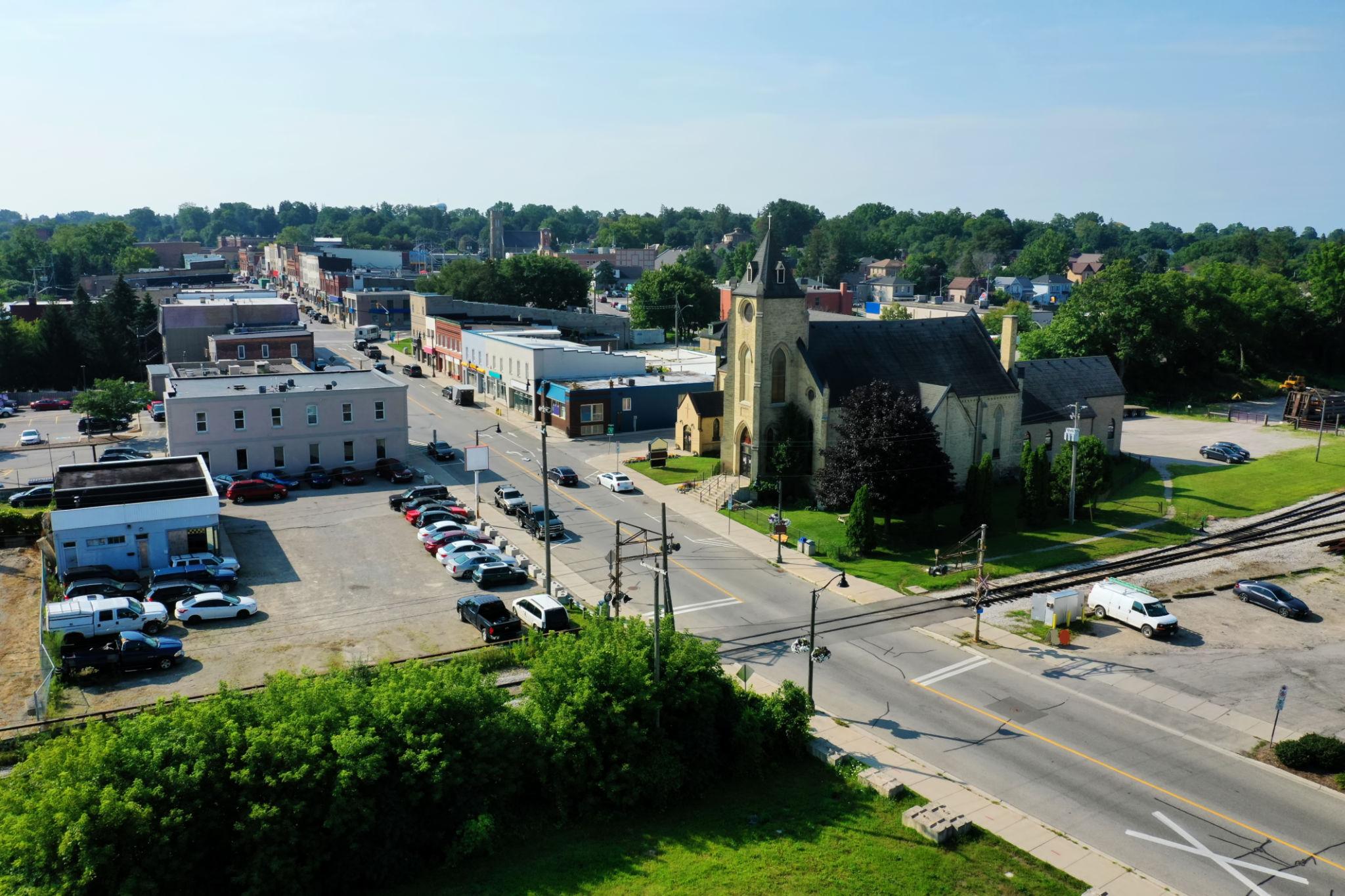
Where keywords meet reality
If you are searching for commercial appraisal services in Oxford County, avoid letting the phrase become a commodity. The difference between a check‑the‑box report and a rigorous narrative shows up in cap rate support, lease‑up modeling, and how well the highest and best use analysis reflects each municipality’s bylaws and servicing timelines. Whether your query is commercial real estate appraisal Oxford County, commercial appraiser Oxford County, or commercial property appraisal Oxford County, what you need is a professional who can articulate a local, defensible opinion and stand behind it with evidence that an underwriter respects.
What to expect after delivery
Good practitioners will walk you through the draft. If a conclusion surprises you, ask which single assumption, if altered, would move value the most. Often it is the cap rate or normalized NOI, but sometimes it is a zoning interpretation or an overly cautious downtime. If you have new evidence, present it without bravado. Appraisers can and do revise when better facts appear, but they are rightly wary of pressure untethered from market support.
If the report is heading to a lender, request that the final copy carry the correct addressees and reliance language. Keep your document set tidy, because a banker may ask for the same exhibits the appraiser used. When your next deal comes around, the fact that you ran a disciplined process once will smooth the path.
A brief word on timing the order
Order too early and you risk stale data if your closing slips or market conditions move. Order too late and you force a rush with extra fees. The practical sweet spot is to commission the appraisal once you have a firm purchase agreement, lender term sheet, and a clear data room. If you are refinancing, get updated financials and rent rolls in hand, plus any recent capital project documentation, before you start.
Bringing it all together
An appraisal is not a magic number maker, it is a structured argument about value. In Oxford County, where market nuance and municipal detail shape outcomes, the investor who asks sharper questions gets a stronger argument. Define intended use. Anchor the scope early. Deliver clean data and local evidence. Engage on cap rates, lease‑up, and zoning with specifics, not generalities. That is how you turn a commercial appraisal in Oxford County from a hurdle into an asset that moves your deal forward.