How Commercial Property Appraisal in Huron County Impacts Investment Decisions
Markets built on grain elevators, machine shops, farm supply depots, and summer traffic from the lake do not behave like big city cores. Huron County’s commercial landscape is shaped by agriculture, small manufacturing, health care, logistics tied to Highway 4 and 21, and seasonal tourism along the Lake Huron shoreline. That mix creates pockets of steady lease demand, yet sales are infrequent and each deal carries a story. Appraisal is the language that translates those stories into numbers investors can underwrite.
A credible commercial property appraisal in Huron County is more than a valuation report. It is a decision tool. Whether you are buying a small-bay industrial building in Exeter, refinancing a grocery-anchored strip in Goderich, or converting a former bank branch in Wingham to medical space, the appraiser’s choices around data, comparables, cap rates, and risk adjustments can nudge a project from green light to hold.
What makes Huron County different
Local context matters. In larger metros, a six month sample can produce dozens of comparable sales and a clean trend line. A commercial appraiser in Huron County works with thinner trading volume and broader property variability. One industrial condo with floor drains and upgraded power may sit within a short drive of an older, wood-frame shop with limited clear height. Appraisal here leans on careful verification and a pragmatic sense of functional utility.
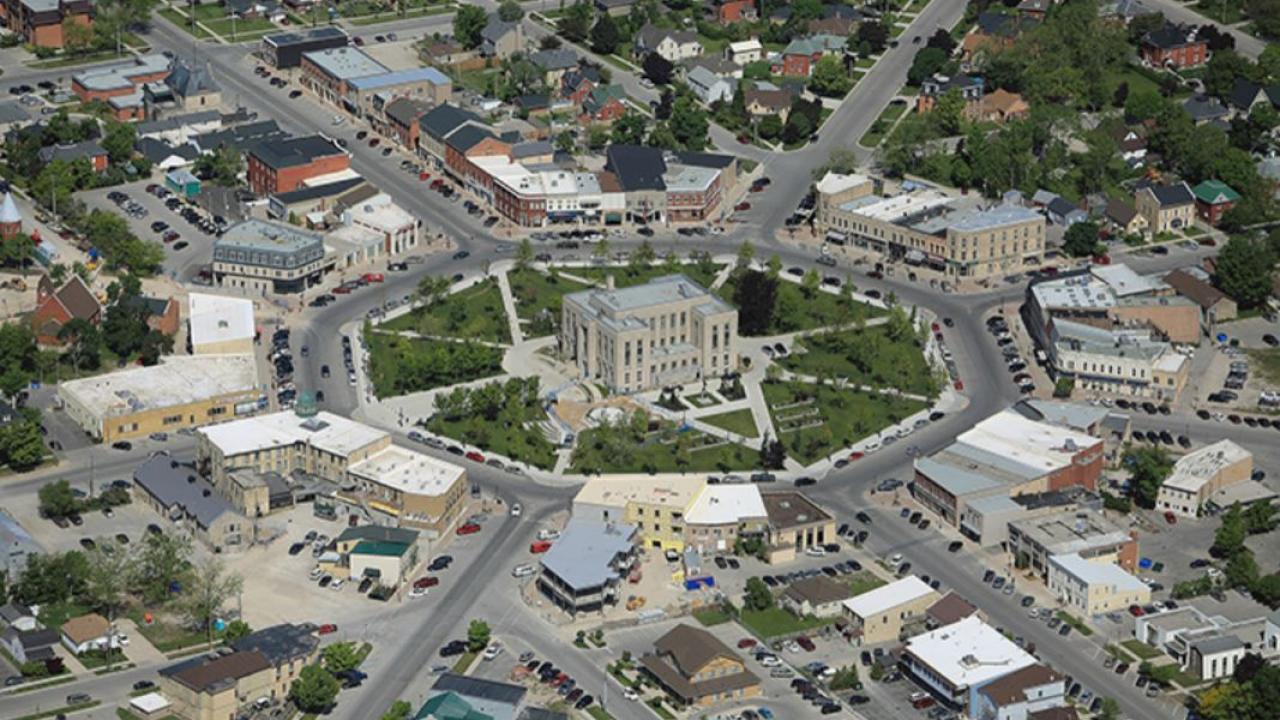
Tourism shapes demand along the shoreline. Retail along Goderich’s downtown square feels different from highway commercial at the edge of town, and both perform differently from main street retail in inland communities like Clinton or Seaforth. Agricultural services remain durable anchors. Seed dealers, implement repair, feed mills, and cold storage support occupancy even when discretionary retail softens over the winter.
All of that informs three things investors watch closely: achievable market rent, stabilized operating costs, and a defensible capitalization rate. A good commercial appraisal in Huron County puts those numbers within a believable range and explains the why with local evidence.
The three valuation approaches, in practical terms
Appraisers rely on the income, sales comparison, and cost approaches. Each has strengths, and in small markets their relevance shifts with property type.
Income approach. For leased commercial assets, this carries the most weight. The appraiser models potential gross income, applies vacancy and credit loss, and subtracts operating expenses to estimate net operating income. The art lies in normalizing unusual leases. For instance, a mom and pop tenant on a gross lease with utilities included will be adjusted to an economic equivalent of a triple net structure so that cap rate benchmarks are comparable. In Huron County, vacancy assumptions can vary by submarket. A well-located multi-tenant industrial in Exeter might stabilize at 3 to 4 percent vacancy based on recent absorption, while second floor office over retail in a smaller town may warrant 8 to 10 percent, especially if stair-only access limits users.
Sales comparison approach. Thin trading volume does not make this irrelevant. It just raises the bar for verification. A commercial appraiser Huron County practitioners trust will phone brokers, confirm what was included in the price, and scrub out sales influenced by vendor take-back mortgages or bundled equipment. Sales from nearby counties can be instructive when they share true market drivers, like traffic counts, building age, and exposure. Adjustments for condition and functional utility are often larger here than in cities because the delta between modern and obsolete space is wider.
Cost approach. Replacement cost new, less depreciation, is powerful for special-use properties and for new builds where income history is still forming. Rural construction often carries premiums for materials transport and a thinner subcontractor pool, and those premiums belong in the estimate. Economic obsolescence can be acute for buildings that no longer match demand, such as oversized warehouses with insufficient power supply or grain facilities where newer logistics options have shifted truck flows.
When an appraiser weighs these approaches, they do not just average the values. They explain reliance. A lender reading a report on a stabilized pharmacy will look for heavy reliance on income and a cross-check to sales. A single-tenant owner-occupied machine shop might lean more on sales and cost, with an imputed market rent used to sanity-check the outcome.
Cap rates live within a story, not a spreadsheet cell
Investors often ask for the cap rate first, then fill in the rest. That flips the sequence. In small markets, cap rates preserve logic only if the income inputs are realistic and the property’s liquidity risk is put on the table. As of the past year, strip retail in secondary Ontario markets has commonly traded in the mid to high 6 percent to low 8 percent range depending on tenant mix and lease terms. Single-tenant assets without covenant strength can stretch higher. Well-located small-bay industrial can compress toward the tighter end when vacancy is scarce and build-to-suit costs have escalated.
The nuance in Huron County sits in tenant quality and relettability. A pharmacy with a national banner on a long lease will land toward tighter yields than a locally owned specialty retailer. Medical office, dental, or government service users often improve stability in otherwise thin downtowns. The appraiser’s cap rate conclusion should anchor in verified sales in Huron and adjacent counties, then adjust for lease length, rent escalations, maintenance responsibilities, and capital expenditure profiles. In practice, a 50 to 100 basis point swing is common once these factors are parsed.
Highest and best use is not boilerplate
Many small-town buildings have lived several lives. A former bank might want to be a café, then a boutique office, then a health services clinic. Highest and best use analysis filters those ideas through four tests: legal permissibility, physical possibility, financial feasibility, and maximum productivity. In Huron County, the first two are where outside investors can stumble. Zoning by the local municipality may not allow conversion as-of-right, and heritage overlays can constrain façade changes. Gravel parking, accessibility, and loading access make or break prospective uses.
A commercial property appraisal Huron County investors can act on will confront those constraints. If an older two-storey in a town core has limited accessible washrooms and no elevator, the appraisal should not assume premium office rents on the upper floor. It should weigh whether the capital outlay to cure those issues is financially viable in this market or whether an alternative use with modest fit-out is the path of least resistance.
Data scarcity and how a seasoned appraiser fills the gaps
Scarcity does not mean guesswork. It means triangulation. An experienced commercial appraiser Huron County owners rely on will:
- Verify sales through direct conversations and public records, discarding any with atypical motivations or bundled business value.
- Expand the search radius carefully, bringing in comparables from similar towns with aligned employers, traffic flows, and demographics.
- Normalize rents by stripping out landlord-provided utilities or tenant improvements, then rebuilding an apples-to-apples triple net equivalent.
- Cross-check with lenders and brokers for on-the-ground leasing momentum and incentives actually being offered.
- Reconcile divergent signals by explaining marketability and exposure time, not just a single point value.
Those steps look like common sense, but they take time and judgement. They are also the backbone of reliable commercial appraisal services Huron County lenders and investors treat as decision-grade.
What lenders look for, and how that shapes the appraisal
Financing drives investment math. Local credit unions and Schedule I banks often underwrite more conservatively in smaller markets. Appraisals feed loan-to-value ratios, debt service coverage, and covenant analysis. Exposure time and marketability comments matter, because they hint at liquidation risk if something goes wrong.
On an owner-occupied industrial building, lenders may ask the appraiser to opine on market rent to support a sale-leaseback scenario. For investment retail, the emphasis tilts to tenant covenants, lease rollover schedules, and how quickly dark space could be released. Appraisals that spell out re-lease assumptions by unit size and type reduce surprises in credit committees.
Taxes, assessments, and operating expenses that move the needle
Ontario’s property tax base relies on assessments prepared by MPAC. Assessment is not market value, but the resulting taxes are a line item tenants notice. In triple net leases across Huron County, tenants usually pay their proportionate share of realty taxes, insurance, and common area maintenance. The appraiser should confirm whether the landlord can fully recover these TMI costs under each lease. If a legacy lease caps increases or omits a recoverable item, the appraisal’s stabilized expense ratio must reflect that. The difference between an 18 percent and a 24 percent expense load on effective gross income can shift value by hundreds of thousands of dollars on modest assets.
Development charges and building permit fees vary by municipality and affect build-to-suit economics. Where fees are modest and land prices reasonable, replacement cost sets a rational floor on value for modern assets. Conversely, where materials and trades carry rural delivery premiums, it can be cheaper to buy and retrofit than build new, even if retrofits are not perfect. That relationship between cost and value is a quiet driver of cap rate expectations.
Environmental and building risks are different, not lesser
Smaller communities are not immune to environmental issues. Former fuel stations, auto repair shops, and agricultural chemical storage sites dot main corridors and backlots. Appraisals often include commentary on known or suspected contamination and may be conditioned on a Phase I ESA. If an older industrial building predates modern fire separations or has wood columns, insurers and lenders will look for upgrades or pricing to reflect the additional risk.
For investors, the question is not whether risk exists but whether the appraisal has captured it. If the report assumes an as-clean site, yet a record search shows a waste generator number associated with the address, the valuation might be overstated. A good report flags the issue and contains either a hypothetical condition or a requirement for environmental due diligence, so everyone is underwriting the same reality.
Rent setting in thin markets
Setting market rent in Huron County requires more patience than in cities. Averages can mislead. A 1,200 square foot boutique space on a walkable main street does not lease at the same rate as a 6,000 square foot highway pad, even if the gross pay-in works out similar when you include signage and yard space. Industrial rents tend to cluster by clear height and power. Where three-phase power and 18 foot clearance exist, small-bay users will often pay a premium compared to older, lower shop space.
The appraiser’s rent conclusions should be backed by a ledger of recent leases, not just asking rates. Concessions matter. Two months free on a three year deal trims effective rent. Tenant improvement allowances are rare for mom and pop retail, but medical and dental tenants may negotiate meaningful fit-up contributions. When those appear, the capitalization should shift from a face rent to an effective rent consistent with how comparable sales were analyzed.
How appraisal answers the investor’s real questions
Beneath the tables and appendices, investors look for clarity on five decisions: buy, build, hold, refinance, or reposition. A thorough commercial real estate appraisal Huron County stakeholders value will answer:
- What range of value emerges under realistic leasing and expense outcomes, and how sensitive is that range to a 50 basis point cap rate move?
- If a tenant vacates, what is the reletting path, timeline, and likely rent band, given local demand?
- Are there capital items within the first five years that would change the income profile, such as roof replacement or parking lot reconstruction?
- Does zoning or site layout block the most profitable future use?
- How does this asset compare to recent alternatives a buyer could have pursued within a 45 minute drive?
These are operational questions, not just valuation mechanics. When a commercial appraiser Huron County clients hire can speak to them convincingly, the report turns into a strategy memo, not just a compliance document.
Case sketches from the field
A multi-tenant industrial in Exeter. Four bays, each 2,500 to 3,000 square feet, with drive-in doors, modest office buildouts, and basic gas heat. Vacancy sat near zero for two years, with new tenant demand from trades supporting the housing market. Rents moved from the low teens per square foot, net, to the mid-teens within 18 months. An appraisal leaned heavily on the income approach with a 4 percent stabilized vacancy and a cap rate near the tighter end of the local range, supported by a handful of verified sales within 60 to 90 minutes of Huron. The sales approach was supportive, though adjustments for age and clear height were material. The investor green-lit a refinance that pulled equity for a small expansion on an adjacent lot because the report spelled out depth of demand by user type.
A downtown Goderich mixed-use building. Ground floor retail, two upper residential units, and a basement with limited utility. The retail tenant was a stable service use with a five-year term, the apartments were month to month. The appraisal identified that the real upside was not retail rent growth, but modest renovation of the apartments to improve quality and capture fair market rent. The capitalization rate applied to the retail was tighter than to the residential due to lease security, but the blended rate still reflected small-town liquidity risk. The buyer used the appraisal’s rent roll sensitivity to stress test debt service during the renovation period.
A former bank branch in a smaller inland town. Solid construction, but an awkward floorplate and a vault occupying prime frontage. The report’s highest and best use analysis concluded that financial services was no longer the financially feasible use, and that medical office or government services would be the most productive if accessibility upgrades were added. Cost-to-cure estimates were included, and the income approach modeled a lease-up period of https://johnnyrrkk837.timeforchangecounselling.com/commercial-property-assessment-huron-county-what-lenders-expect nine months with a tenant inducement allowance. That specificity gave the buyer cover to negotiate a price that reflected both demolition of the vault and the new washrooms required.
The people side of commercial appraisal
Credentials matter. In Ontario, AACI-designated appraisers carry the training and liability framework expected for commercial assignments. Yet designations are the start, not the finish. Familiarity with Goderich’s port area, the pace of leasing in Exeter’s industrial parks, and the quirks of smaller downtowns like Clinton can change the valuation by real dollars. An appraiser who calls local property managers, walks the alleys behind main street, and looks at roof conditions rather than relying on assumptions tends to surface issues earlier.
Timelines and scopes vary. A drive-by or restricted-use report might satisfy internal decision making, but lenders and boards often need a full narrative with photos, rent rolls, lease abstracts, and detailed reconciliation. Rush work invites mistakes, especially where sales verification takes time. Experienced investors in Huron County build a week or two of verification slack into their deal calendar, because the extra phone call often pays for itself.
Preparing for an appraisal without gaming it
Investors sometimes worry that sharing information will bias the appraiser. It is better to provide complete, organized data and let the appraiser test it than to omit key facts and risk a credibility gap. A simple pre-appraisal package helps:
- Current rent roll with lease start and expiry, option terms, and any percentage rent or caps on recoveries.
- Operating statements for the past two years, broken down by taxes, insurance, utilities, repairs, management, and reserves.
- Copies of major leases, especially any with non-standard clauses or landlord obligations for improvements.
- A list of recent capital projects with costs, such as roof, HVAC, or paving.
- Notes on pending changes, like a tenant notice to vacate or a signed LOI not yet executed.
These items do not replace independent verification. They give the appraiser a head start and reduce the risk of correcting the record late in the process.
Where deals stumble, and how appraisal can warn you early
Most busted deals do not fail on price alone. They fail on mismatched assumptions. In Huron County, watch for these common trip points:
- Overestimating market rent for unique or functionally obsolete spaces that lack accessibility or proper loading.
- Ignoring capital expenditures that are front loaded in the first two to three years, such as roofs on older plazas.
- Assuming swift re-letting of specialized spaces in towns with limited tenant pools.
- Treating non-recoverable expenses as recoverable in stabilized models.
- Underpricing environmental or building code risks where retrofits are complex.
A thoughtful commercial appraisal Huron County investors can rely on will flag these items well before closing. If the report does not mention them, ask why.
Reading the reconciliation with a lender’s eye
The reconciliation section is where the appraiser earns trust. In thin markets, you will see wider bands of adjustments in the sales grid or broader ranges for cap rate support. That is normal. What matters is whether the appraiser explains the weight placed on each approach, the rationale for the final cap rate within the supported range, and any extraordinary assumptions or hypothetical conditions that could change value if proven false.
Exposure time and marketing time deserve attention. If the report cites nine to twelve months for exposure at the concluded value, your disposition plan should not assume a 60 day sale. That time element informs debt structure, reserve planning, and exit cap assumptions in your model.
How appraisal outcomes steer strategy
Price is not the only lever. A valuation that lands below expectations might still support a project if other terms improve. If the appraisal highlights limited near-term rent growth but strong tenant stickiness, a longer amortization or a vendor take-back can restore DSCR. If highest and best use analysis suggests a different tenant mix, underwriting should adjust exit assumptions, not just initial cap rate.
Conversely, a high valuation without a clear path to sustain or grow income is not a victory. In small markets, liquidity risk shows up when leases roll. A sober appraisal that ties value to reletting assumptions forces a better asset plan. That is the quiet service a good commercial appraiser Huron County professionals provide.

Final thoughts from the field
Commercial real estate rewards investors who match local knowledge with disciplined underwriting. In Huron County, that means reading past the executive summary. The best appraisals bridge market color with hard numbers. They do not pretend that five comparables exist where only two are truly relevant. They do not model city rents that will not land in a town where the strongest tenants are medical, government services, and durable local retailers.
If you are structuring a deal, ask the appraiser to talk you through the relationships in the report. How did the rent conclusions tie back to verified leases, not listings? What would push the cap rate up 50 basis points, and how likely is that in the next two years? Which expenses are trending faster than inflation locally? You are not challenging the valuation. You are testing the sensitivity of your investment to the risks the appraisal has already surfaced.
That conversation, paired with a thorough commercial property appraisal Huron County practitioners stand behind, is often the edge that separates an average outcome from a resilient one.