From Retail to Industrial: Commercial Real Estate Appraisal in Dufferin County
Commercial valuation in Dufferin County sits at a crossroads of small town pragmatism and Greater Toronto Area spillover. The county’s retail corridors run through Orangeville and Shelburne, its industrial stock clusters near Highway 10, Highway 9 and Highway 89, and its rural concessions host quarries, laydown yards, agricultural processors, and utility infrastructure. Appraising this mix requires local detail, not just textbook technique. A credible opinion of value hinges on understanding how a 1970s strip on Broadway trades versus a modern tilt‑up in Mono, why a well and septic property underperforms a fully serviced site, or how one extra truck bay can swing a cap rate.
Over the past decade, Dufferin has absorbed demand from the GTA while trying to keep pace with infrastructure and planning. As e‑commerce lifted industrial rents and population growth pushed new rooftops north, capitalization rates compressed, then widened again with interest rate hikes. If you are hiring a commercial appraiser in Dufferin County, you need someone who can sort this signal from the noise, ground every adjustment in evidence, and translate municipal nuance into market consequences.
A county of submarkets, not a single market
Dufferin may be a single jurisdiction on paper, but appraisers do not value a plaza in Orangeville the same way they treat an industrial yard in Amaranth. Activity concentrates in a handful of nodes with different rent drivers, tenant profiles, and land constraints.
Orangeville is the retail anchor. Broadway and First Street carry legacy strips, shadow‑anchored plazas, and mixed‑use buildings with apartments upstairs. South of Broadway, service commercial uses line Riddell Road, including automotive, self‑storage, and flex industrial. Most national retailers prefer the visibility, traffic counts, and household incomes here, which supports stronger rents and lower vacancy. For commercial real estate appraisal in Dufferin County, Orangeville often sets the high watermark for retail lease comparables.
Shelburne has changed fastest. A wave of residential growth has attracted grocery, pharmacy, restaurants, and automotive services, mostly in highway‑oriented formats along Highway 10 and County Road 124. Industrial stock is thinner than in Orangeville, but demand for small‑bay shops and contractor yards has climbed, partly due to land price differences and proximity to the County’s agricultural and quarry operations.
Mono, Amaranth, Melancthon, and Grand Valley round out the picture with rural industrial, aggregate, logistics support, and special purpose facilities. Here, zoning, access to provincial highways, road weight limits, and https://danteqdim945.capitaljays.com/posts/why-hire-local-commercial-building-appraisers-in-dufferin-county services matter more than foot traffic. Appraising a 5‑acre contractor yard on a rural concession road involves different techniques, data sources, and risk assessment than valuing a triple‑net retail unit on Broadway.
This is the working frame for any commercial property appraisal in Dufferin County. The asset class sets the method, the submarket sets the inputs, and the site’s constraints set the risk.
Retail valuation, block by block
Retail in Dufferin splits into three common types. First, main street units in older buildings with varied ceiling heights, uneven basements, and mixed services. Second, community or neighbourhood plazas with surface parking, typical unit sizes of 1,000 to 3,000 square feet, and a grocery or pharmacy anchor nearby. Third, highway‑commercial single‑tenant boxes and restaurants with drive‑throughs.
Main street rent often looks high on a per square foot basis because units are small and character space can attract local boutiques or food service. The flip side is more turnover, more tenant improvement requests, and older building systems. When I review leases on Broadway, I look just as hard at maintenance obligations as at face rent. If a landlord is responsible for rooftop HVAC on a 30‑year‑old system, the net effective rent comes down after capital reserves.
Community plazas tell a different story. A plaza shadow‑anchored by a grocery will see deeper demand for daily needs tenants, doctors, and services. Appraisal here leans on direct capitalization with a stabilized rent roll and a vacancy allowance tied to recent re‑leasing time. Co‑tenancy clauses can change risk if a grocer or pharmacy leaves, which is why tenant mix stability feeds into the cap rate discussion.
Highway commercial properties introduce drive‑through stacking, curb cuts, and traffic counts into the valuation. A fast food tenant with a drive‑through in Shelburne can pay a premium net rent compared to an inline tenant two blocks off the highway, but that premium rests on traffic and site design, not just signage. Appraisers in Dufferin County who gloss over stacking lane capacity or left‑in access from a county road miss real value levers.
In numbers, typical net rents for stabilized, inline retail in Orangeville over the last few years have ranged from the mid‑teens to the mid‑twenties per square foot, depending on visibility, size, and condition. Prime small units can push higher, especially in brand new builds or rare corner locations. Secondary locations and older stock trend lower. Vacancy in strong locations has hovered in the single digits, often near 4 to 6 percent, but it varies by block and by the asking rent relative to condition.
Industrial valuation, bay by bay and acre by acre
Industrial demand in Dufferin County leans practical, not glossy. Users include building trades, light manufacturing, warehousing tied to local distribution, agricultural processors, and businesses serving the quarry and construction ecosystem. Buildings range from pre‑engineered metal with 18‑ to 22‑foot clear heights to newer tilt‑up with 24‑ to 28‑foot clear. Many rural properties pair a shop with abundant yard storage and heavy vehicle access.
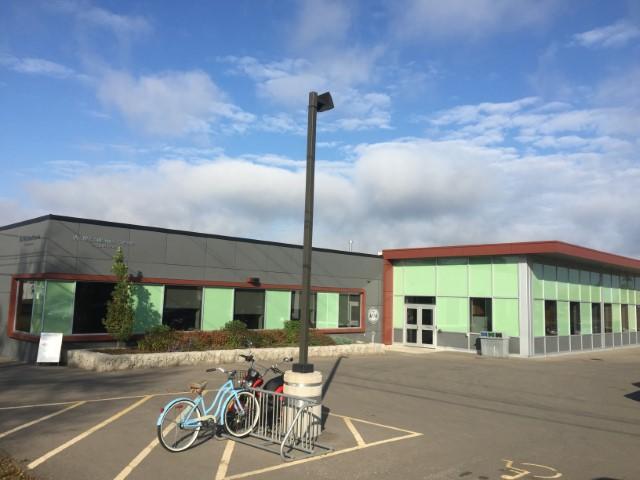
Lease rates tell a two‑tier story. Newer serviced buildings with good clear height, three‑phase power, and multiple dock or grade doors have achieved net rents in the low to mid‑teens per square foot in recent years, with the very best small‑bay units occasionally edging higher. Older shops with limited power, low clear height, or functional obsolescence can trade at single‑digit net rents. Owner‑occupied facilities complicate the data, because they do not produce arm’s‑length leases. An experienced commercial appraiser in Dufferin County will corroborate lease rates with reported transactions, marketing ranges, and, when necessary, cost and sales benchmarks.
Yard‑heavy industrial is its own valuation problem. Not all outdoor storage is created equal. Paved, fenced, lit yards with MTO truck route access support higher effective rents and lower risk than gravel yards down a seasonal road with spring weight restrictions. If a site is on well and septic, that can cap potential building expansion or add operating costs, which translates to rent and cap rate adjustments.
Vacancy has been tight in functional industrial product, often below 3 percent in the best pockets, though small user churn in older stock can lift the local figure in any given month. Investors price that scarcity, but they also price tenant strength, building adaptability, and the resale pool. An industrial condo unit with a small owner‑user market may see slightly more buyer depth than a single large bay in a one‑off rural building. These nuances sit at the heart of commercial real estate appraisal in Dufferin County.
Data scarcity and the “GTA adjustment”
In small markets, one sale can swing averages. That reality cuts both ways. If only two comparable industrial buildings sold last year in the county, and one was a vacant bank‑owned disposition while the other was a turnkey, fully leased asset, you do not simply average their cap rates. The same caution applies when borrowing data from Caledon, Bolton, or north Brampton. Rents there may be higher due to proximity to Highway 410 and 427, deeper labour pools, and logistics clustering. The best practice is to bracket values with local evidence first, then select GTA‑adjacent comparables that share key characteristics and adjust for differences in exposure, tenant demand depth, and land cost.
I keep a running matrix of adjustments that have held up across reports. For example, when moving a retail cap rate from a high‑visibility arterial in Caledon to a secondary Orangeville location, downward rent potential and thinner buyer pools often dictate a basis point increase, not because of perceived risk alone, but because of exit liquidity. The magnitude of that move changes with interest rates and leasing momentum, so it is never a fixed number. That is where professional judgment, backed by notes from broker interviews and verified marketing histories, matters.
Approaches to value that fit the asset
There is no one size fits all method. Each approach tells part of the story.
Income approach. For leased retail and industrial, direct capitalization remains the workhorse. Stabilized net operating income, market vacancy, structural reserves, and market‑based cap rates produce a clean output. In properties with lease rollover risk or major near‑term capital items, a discounted cash flow helps capture changing income and exit pricing. In Dufferin County, I use DCF selectively, often for multi‑tenant retail with staggered expiries or for industrial with known step‑ups and options.
Sales comparison. This is critical for owner‑occupied industrial and for retail with short leases that effectively trade as vacant or semi‑vacant. Price per square foot should be segmented by building quality, clear height, loading, and site utility. Land value underpins both improved and vacant sites, so I track serviced industrial land trades separately from rural commercial and agricultural parcels with site‑specific permissions.
Cost approach. In rural special‑purpose properties, or in newer owner‑occupied builds with limited market comps, the cost approach anchors the lower bound for value when income or sales data is thin. Replacement cost new, less physical depreciation, plus land value, forces you to account for functional realities. A pre‑engineered metal building with 16‑foot clear and insufficient power might be “new,” but if users demand 24‑foot clear and excess yard, it suffers functional depreciation.
A strong commercial appraisal services provider in Dufferin County does not default to one approach. They pick, defend, and reconcile, then show their work.
Zoning, services, and approvals that change value
Municipal zoning is not a footnote. It drives rent potential and exit value. Dufferin municipalities apply site plan control widely for commercial and industrial development, and many rural properties rely on private wells and septic systems. Appraisers who confirm only the current use without reading the zoning by‑law and speaking with planning staff risk valuing the wrong thing.
In retail, parking ratios, permitted uses, and drive‑through permissions determine tenant pool depth. In industrial, outside storage permissions, maximum lot coverage, and environmental buffering shape how a buyer can expand or reconfigure. I have seen 10 percent differences in market value arise simply because one site allowed legal outside storage up to a certain percentage of lot area while a nearby site did not.
Servicing matters as much as zoning. Municipal water and sewer in Orangeville and parts of Shelburne support denser coverage and food service uses. A comparable on well and septic in Mono might require adjustments for capacity limitations, maintenance obligations, and lender perception. Power is another recurring factor. Three‑phase service and transformer size are both line items in a tenant’s decision, and thus, in the rent. A candidate property with only 200 amps single‑phase will not draw the same base as a 600‑volt three‑phase shop ready for equipment.
Environmental and building realities that lenders ask about
Phase I Environmental Site Assessments are routine for lending on commercial, especially with historic uses like automotive, dry cleaning, or metal work. In Dufferin’s older retail strips, legacy tenants can trigger higher scrutiny, even if they left a decade ago. For industrial, the presence of floor drains, oil‑water separators, and evidence of outside storage influences risk. Appraisers are not environmental consultants, but we flag the risk profile and reflect the likely lender response in cap rates or marketing times.
Building systems warrant similar detail. Roof age and type, heating and cooling systems, and loading configurations all feed back into rent and cap rate. A 25‑year‑old roof with ongoing patchwork may call for a reserve allowance. An industrial building with two docks and one grade door functions differently for distribution than a shop with three grade doors and no docks. These practical distinctions underpin credible adjustments.
Market metrics, cap rates, and the rate cycle
The rate environment has been a moving target since 2022. As the Bank of Canada lifted rates, investors widened cap rates to match higher debt costs and uncertainty, especially in secondary markets. In Dufferin County, cap rates for stabilized community retail have generally clustered in the mid to high 6 percent to low 7 percent range in better locations, with secondary assets moving into the high 7s or 8s depending on tenant mix and building age. Inline main street retail with shorter terms can push higher. For industrial, the best small‑bay, modern assets have seen cap rates in the high 5s to low 6s during periods of strong demand, but more recently, many deals pencilled in the mid 6s to low 7s. Older, functionally limited industrial can fall into the high 7s or even 8s.
These are directional ranges, not guarantees. An appraiser’s work is to match asset specifics, lease quality, and market liquidity to a cap rate, then test it against published surveys and local transactions. When a property sits at the edge of two risk profiles, I reconcile toward the weaker side unless the evidence justifies optimism.
On rents, retail has tracked inflation and cost pressures unevenly. National covenants with indexation have protected some landlords, while mom‑and‑pop tenants have negotiated flat periods on renewal to absorb wage and input cost changes. Industrial rents moved sharply higher from 2020 to 2023, then moderated as new supply and rate sensitivity cooled expansion plans. In Dufferin, the ceiling remains below GTA prime submarkets, but the gap narrowed, especially for modern, well serviced buildings.
Owner‑occupied, investor‑owned, and the hybrid cases
Appraising a building that an owner occupies requires extra care. Without arm’s‑length leases, the income approach can mislead if you insert above‑market rent to make the numbers work. Lenders usually ask for a market rent schedule alongside a direct capitalization analysis, then a weighted reconciliation with sales and cost. If a vendor has completed a sale‑leaseback at above‑market rents to juice price, expect the cap rate to float up to normalize yield.
Hybrid assets are common in Dufferin. A contractor may occupy two bays and sublease the third. Or a medical practice may own the building and rent extra suites to allied health users. The right approach weighs the stability of the subleases and the buyer universe. If most likely purchasers are owner‑users who value the extra rent as a subsidy, the sales comparison approach with owner‑user comps deserves more weight, with income as a cross‑check.
The rural edge cases that trip people up
Aggregate and resource‑adjacent uses bring externalities. Quarries generate heavy truck traffic, dust, and noise, which can limit alternative uses for nearby sites but also create demand for support yards and maintenance shops. Seasonal road restrictions can disrupt logistics for certain users. A property that appears cheap per acre may carry hidden costs in road upgrades, entrance permits, or stormwater management on a clay subgrade. Appraisers who ask about these items early save their clients from surprises later.
A short vignette from the field
Several years ago, I appraised a two‑tenant retail plaza just off Broadway in Orangeville. One tenant was a national pharmacy on a long term net lease with options. The other, a local restaurant, had a lease renewing within 12 months. The building was from the late 1990s with a roof nearing the end of its service life. Early read: solid income, low vacancy risk, modest capital exposure.
But the leases told a deeper story. The pharmacy had a co‑tenancy clause tying rent to the continued operation of a grocery store across the street. That grocery was rumored to relocate to a new build further south. Meanwhile, the restaurant’s sales dipped in winter months due to limited parking spillover. With broker interviews and a fresh traffic count, I adjusted the vacancy allowance slightly upward and carried a higher reserve for roof replacement. I also bumped the cap rate by 25 basis points to reflect co‑tenancy risk.
The owner bristled at first, because the headline cap rates in Toronto looked lower. When the grocery did relocate nine months later, the valuation held up in a refinancing. That is not clairvoyance. It is the cumulative benefit of reading clauses, walking the parking lot on a Saturday, and pricing risk instead of assuming it away.
Working with a commercial appraiser in Dufferin County
A strong engagement starts with clarity. Appraisers do their best work when they have full information and a defined problem. For clients seeking commercial appraisal services in Dufferin County for financing, estate planning, litigation, or acquisition, a short preparation checklist helps.
- Recent rent roll with lease abstracts, including expiries, options, and recoveries
- Last two years of operating statements with details on repairs, capital items, and utilities
- Site plan, building drawings if available, and a list of building systems with ages
- Notes on zoning, any variances or site plan approvals, and servicing details
- Disclosure of known environmental reports, roof warranties, and any deferred maintenance
With that file, a commercial property appraiser in Dufferin County can turn around a report more efficiently and defend every line item to a lender or court. Transparency on issues does not depress value by default. It allows the appraiser to place them in context with market benchmarks and to propose credible mitigations.
Retail and industrial, side by side
Retail and industrial share valuation tools, but their drivers diverge in predictable ways. Keeping the contrasts straight sharpens the analysis and reduces noise when you reconcile approaches.
- Demand magnet. Retail rents track household incomes, traffic, and co‑tenancy. Industrial rents track functionality, power, loading, and yard utility.
- Lease structure. Retail often features net leases with variable recoveries and co‑tenancy clauses. Industrial net leases tend to be simpler, but escalations and maintenance carve‑outs can vary widely.
- Capital expenses. Retail roof and HVAC cycles weigh heavily due to tenant expectations. Industrial capital often focuses on pavement, loading, and specialized power upgrades.
- Exit liquidity. Retail buyer pools in Dufferin hinge on tenant covenant and location, while industrial buyers prioritize adaptability and owner‑user resale depth.
- Risk markers. Retail risks cluster around anchor stability and competition. Industrial risks pivot on obsolescence, environmental history, and access restrictions.
These contrasts matter when selecting cap rates, setting reserves, and bracketing values. They also influence the narrative of the report, which lenders read as closely as the tables.
What trends to watch over the next 12 to 24 months
Interest rates will steer investor appetite. If borrowing costs ease, cap rates may compress modestly, with the best assets moving first. Industrial construction costs remain elevated, which supports rents for new product but restrains speculative building in secondary markets. Retail tenant mix continues to tilt toward services, food, and medical, which tend to be stickier in small markets than discretionary soft goods.
On the planning side, watch for incremental servicing expansions in Shelburne and ongoing transportation upgrades along provincial routes. Even small shifts in available serviced land can unlock new industrial supply. Environmental scrutiny will not ease, especially around automotive and contractor uses. Properties with clean histories and documented upgrades will retain a pricing edge.
For owners and buyers, the practical takeaway is to document improvements, keep leases clean and enforceable, and invest in functionality that broadens the next buyer pool. A dock door, a transformer upgrade, or proper yard lighting can return more than its cost in value because it changes the set of users who can say yes.
The role of local expertise
Out‑of‑town data can fill gaps, but it cannot replace site visits, municipal calls, and conversations with local brokers and property managers. Commercial property appraisal in Dufferin County rewards that fieldwork. It is how an appraiser learns that a particular left turn at rush hour halves a restaurant’s dinner prospects, or that a seasonal road designation limits a yard’s winter use, or that a particular lease form favored in one plaza leads to unexpected repairs for the landlord.
When you engage a commercial appraiser in Dufferin County, ask about their comp set breadth, their familiarity with the local zoning maps, and their track record with both retail and industrial. The best appraisers do not pretend to predict the market. They read it honestly, assemble verifiable evidence, and explain how each assumption would change with new facts. That is what withstands scrutiny from lenders, auditors, and courts.
Commercial real estate appraisal in Dufferin County is not about finding a number that makes a deal work. It is about mapping how the property makes money, what could derail that income, and who will buy it next. From retail on Broadway to contractor yards in Amaranth, the fundamentals respond to the same questions. Are the tenants paying market rent. Can the site support a wider set of users with modest capital. Will a buyer in three years see more options than today. A good appraisal answers those questions with specifics, not slogans, and gives you the confidence to act.