Agribusiness and Rural Commercial Real Estate Appraisals in Wellington County
Drive any road that cuts across Wellington County and you see a working landscape. South of Elora, soybean and corn on deep loams run to the horizon. North of Arthur, fields tighten, and you start to spot beef barns and mixed operations tucked behind shelterbelts. In Erin and Puslinch, equine facilities share fence lines with greenhouses and landscape depots. That mix is what makes appraisal work here rewarding and tricky. Values turn on soil classes and tile lines as much as on tenant covenants and cap rates. A credible opinion of value needs both lenses.
I have spent years completing commercial property appraisal assignments across the townships of Centre Wellington, Guelph/Eramosa, Puslinch, Erin, Mapleton, Wellington North, and Minto, and working just outside the county line when markets overlap. The notes below gather what tends to matter most when assessing agribusiness and rural commercial real estate in this corner of Ontario, with practical detail for owners, lenders, lawyers, and anyone else relying on a report.
What makes Wellington County different
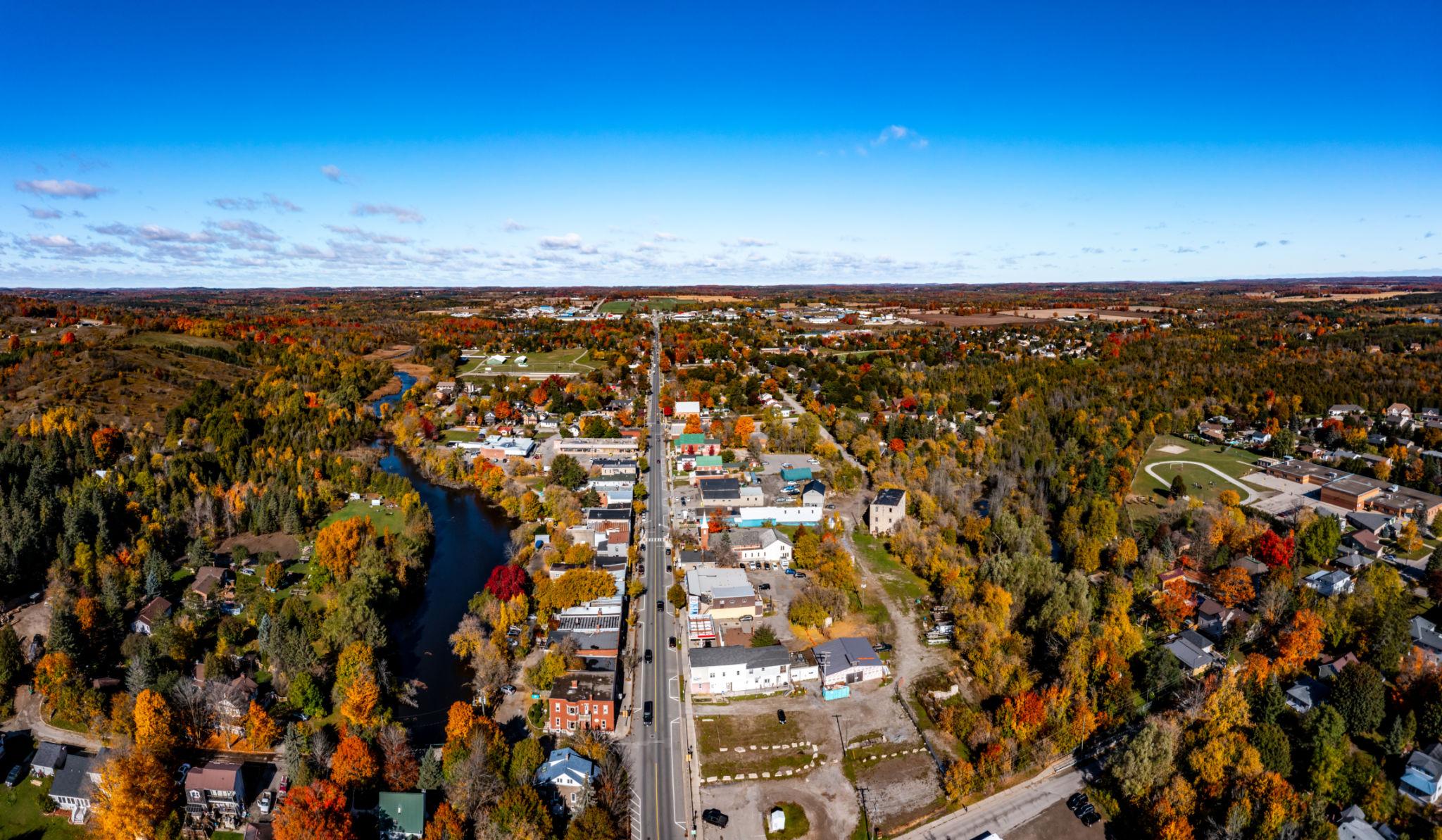
The county contains a full cross section of rural asset types. North and west townships skew agricultural and resource based, with dairy, poultry, hogs, and cash crop farms, as well as grain elevators, feed mills, equipment dealerships, and small-scale fabrication shops serving primary producers. The southern tier, especially Puslinch and Erin, carries commuter pressure from the GTA and Guelph, so rural commercial sites often tilt to contractor yards, landscape supply, agri-retail, and outdoor storage. Centre Wellington has the most balanced mix, including tourism-driven pockets in Fergus and Elora that add hospitality and specialty food processing to the agricultural base.
This range means a single “rural” template does not work. A 100-acre parcel in Mapleton, tiled and contiguous, trades in a different buyer pool than a 5-acre commercial site fronting Highway 6 in Puslinch with M3 zoning and a two-bay shop. When clients ask for a commercial real estate appraisal in Wellington County, the first task is to sort the property into the right market segment, then pick the tools and data that market respects.
The assets we see most often
The bulk of assignments fall into two clusters: income-producing rural commercial assets, and agricultural properties with commercial components. Examples in steady circulation include feed mills with retail space, grain elevators with unit-train or shortline rail spurs, equipment dealerships, freezer and cold storage linked to meat or produce processing, garden centres and landscape depots, contractor yards with open storage, on-farm processing buildings for maple, honey, cider, or specialty grains, and equine facilities that operate as boarding, training, or event venues.
For readers skimming to match their property to a market, the following short list covers frequent rural commercial categories in Wellington County:
- Grain handling and feed supply, from country elevators to modern pelleting mills
- Agri-retail and equipment, including dealerships and parts/service shops
- Food and beverage processing at the small to mid-scale, with cold storage
- Contractor yards, landscape depots, and outdoor storage along arterial routes
- Equine boarding, training, and event facilities with arenas and paddock systems
In every case, location inside the county matters. Properties east of Highway 6 and near 401 access often attract users who will pay for convenience. North of Mount Forest, demand thins but land is available at lower entry prices, which can pull in regional operators ready to accept extra trucking to capture savings.
How an appraiser frames the question
Every credible appraisal rests on highest and best use. That analysis asks, first, what the site and zoning legally allow, second, what the market physically and financially supports, and finally, what use is maximally productive. In Wellington County, this step often determines whether a farm with two barns is appraised as a continuing agricultural operation, a rural commercial site with excess land, or a future estate-residential carve-out if a township’s severance policies invite that path. Lenders often commission a commercial property appraisal in Wellington County with financing terms tied to this categorization, so clarity up front prevents trouble later.
The three classical approaches to value come next. The sales comparison approach leads when we have a healthy volume of relevant trades. The income approach carries more weight with stabilized rural commercial properties that have seasoned leases, like an equipment dealership or a cold storage facility. The cost approach helps when improvements are newer or unique, and market rent or sales data are thin. Good practice is to develop all approaches that fit, then reconcile, explaining weightings instead of averaging thoughtlessly.
The land under everything
On agricultural and rural commercial properties, land contributes more to value than many new investors expect. Soil capability, drainage, and field geometry all matter for production returns and for future flexibility. Wellington County includes large tracts of Class 1 to 3 soils in the south and central portions, with more variable capability as you head north and west. Systematic tile drainage is common on Class 2 and 3 fields. Well-documented tile maps and outlet conditions can add real money to a sale price because they translate to higher yields and wider planting windows. Appraisers will ask about tile size, spacing, installation dates, and outlets. If it is undocumented, consider hiring a contractor to map mains and laterals. A lender ordering a commercial appraisal services assignment in Wellington County will almost always ask for land improvement detail.
Field size and shape influence operational efficiency. A 98-acre farm with two odd-shaped fields and a woodlot is not the same as a clean, 94-acre rectangle with one split. On cash crop farms in this area, cultivated ratio often ranges between 65 and 90 percent. The higher end commands premiums, especially if the farm sits near a major elevator or feed customer. Road frontage type also matters. Paved frontages ease access for commercial trucks, while gravel side roads may restrict seasonal loads under thaw conditions.
Rural commercial sites stand on different land legs. Here, frontage, exposure, and access control order the day. A contractor yard with 500 feet on Wellington Road 34 draws better tenant demand than a similar yard buried on a 12th Line, all else equal. Depth and circulation space for tractor-trailers, surfacing quality, and stormwater management influence utility and, by extension, rent. Power availability is a sleeper issue. If a cold storage tenant needs 600-amp, 600-volt service, a site without capacity faces upgrade costs and delay.
Improvements and functional fit
Valuing barns, shops, mills, and arenas is not one-size-fits-all. A dairy free-stall with a double-8 parlour and manure storage built under Ontario Regulation 267/03 carries specialized value tied to producers with quota. When the real estate is valued without dairy quota and movable equipment, the building set’s contribution typically drops compared to total enterprise value. For equine operations, indoor arena dimensions, footing systems, and ceiling height separate hobby barns from professional facilities. A 72 by 160 arena with proper ventilation and LED lighting performs differently from a 60 by 120 retrofit, especially in winter.
For feed mills and grain handling, appraisers spend time on capacity, clearances, traffic flow, and safety systems. A mill that can load B-train trucks under cover, with two scales and a looped yard, will usually outperform a site that bottlenecks at a single scale house and backs trucks into a lane. Even small design choices matter. One elevator expansion I appraised in Mapleton moved the receiving pit 35 feet and added a second leg. On paper, annual throughput only rose by 12 percent. In practice, reduced wait times during harvest week pushed effective throughput by closer to 20 percent, which showed up in revenues the next fall.
Cost new and depreciation analysis require local costing knowledge. Post-frame shops erected in 2015 with in-floor radiant heat and spray foam insulation have held value well because they remain energy efficient. Older bank barns converted to storage offer charm and utility but often suffer from undersized access, low clearances, and maintenance deficits that translate to higher functional and physical depreciation.
Sales comparison in thin segments
Finding sales that truly bracket a subject is the hardest part of rural work. Sales databases often label farm-support assets as “industrial,” which hides ag-specific details. Public registry pulls miss context like tile, site servicing, or a failing septic. The remedy is phone work. Verify with buyers, sellers, and agents. Ask if the sale included rolling stock, inventory, grain, or paid-up crop inputs. Rural commercial transactions can hide large non-realty components.
Adjustments must be supported, not guessed. If an equipment dealership sale on Highway 89 has a superior highway exposure compared to a subject on a county road near Fergus, it is tempting to drop a flat 10 percent visibility adjustment. Better practice is to tie the difference to measurable traffic counts, tenant demand evidence, and rent schedules. In this area, highway-fronting dealerships often show 0.25 to 0.75 dollars per square foot higher base rent on comparable improvements, with stronger percentage rent potential when OEMs are involved. Translate that rental delta to value before setting a location adjustment. The same logic applies when adjusting for land quality on farm-to-farm comps. If a comparable has 85 percent workable land and the subject has 72 percent, calculate the per-acre contribution of workable land from paired sales or income data rather than reach for a generic factor.
Income approach for rural commercial assets
When stable leases exist, the income approach can lead. Contractor yards and landscape depots commonly lease at rates tied to outdoor storage area and building square footage, with triple net structures. Equine facilities present more challenge because many operators own and occupy. When they do lease, the rent often bundles housing, arena use, and stabling in one number, which needs unpacking to isolate real estate income.
Cap rates in this county have moved with interest rates and buyer profiles. Through 2021, well-located rural commercial with solid covenants sometimes traded at 5.5 to 6.5 percent caps. After the mid 2022 rate shifts, reported deals widened, with typical ranges more often 6.75 to 8.5 percent depending on location, term, and tenant quality. Owner-occupier sales blur the line because buyers value operational fit over pure yield. When reconciling, I build a direct capitalization range informed by local sales, then cross-check with a band-of-investment or mortgage-equity model that reflects current lending terms from regional banks and credit unions. As of the last two years, lenders financing rural commercial here often underwrite at debt coverage ratios between 1.25 and 1.35, with amortizations from 20 to 25 years and interest rates that track broader market movement. Keep the model conservative and explicitly discuss risk factors like short remaining terms, single-tenant exposure, and specialized fit-out that limits backfill options.
On agricultural land, income work leans on cash rents and sharecropping returns. Cash rents in Wellington County have shown wide ranges, from roughly 200 to 400 dollars per workable acre in recent seasons, with outliers for prime tiled land near elevators and for longer-term relationships. Share rent splits of one-third crop to the landlord appear in pockets, but they require careful normalization to isolate the real estate component from management and input contributions. Appraisers should state clearly whether custom work, storage, and on-farm services are embedded in rent estimates or treated separately.
Cost approach and specialized improvements
The cost approach earns its keep with newer agri-industrial buildings and with unique improvements not easily rented on the open market. Replacement cost new, sourced from local contractors and cost services, sets the base. Depreciation then requires judgment. Physical depreciation follows age and condition, but the big swings come from functional and external factors. A well-maintained broiler barn may show limited physical wear after 12 years but still face functional depreciation if ceiling height and ventilation do not meet current best practices or if biosecurity design lags.
External obsolescence often arrives via market changes. A cold storage facility built for a single-processor client may lose value if that processor exits the area. A rural shop fronting a road that later posts seasonal load restrictions may suffer lost utility. These need explicit treatment rather than getting buried under a catch-all percent.
The regulatory frame you cannot ignore
Appraisal is not zoning law, but a correct value depends on the right legal assumptions. Wellington County’s Official Plan and each lower-tier zoning by-law set what you can do and what expansions demand. Many rural commercial uses operate as legal non-conforming, often from pre-zoning or older site-specific approvals. A site with a non-conforming right to store aggregate or operate a sawmill might hold more value than the zoning table suggests. Verify with the township, not just the listing sheet.
Minimum Distance Separation rules affect livestock barns and neighbouring development potential. MDS I and II calculations determine where new barns can go and whether a surplus farmhouse severance will be permitted. When valuing a mixed farm near a village boundary, MDS may cap expansion, which in turn caps the highest and best use as agriculture at its current scale rather than as a growth platform.
Conservation authorities are active across the county, chiefly the Grand River Conservation Authority and the Saugeen Valley Conservation Authority. Floodplain mapping, regulated wetlands, and development limits can take useful land out of play. Source water protection zones around municipal wells layer more constraints. An appraiser should map these overlays and reflect any impact on utility and market appeal.
Environmental diligence matters on rural commercial. Former fuel tanks at equipment dealerships, pressure-treated posts in older feed yards, and washdown areas at food facilities can create cleanup exposure. Reports that ignore this risk read thin. At a minimum, the appraisal should discuss known environmental reports, identify gaps, and consider market-typical discounting when uncertainty remains.
Market currents from the last cycle
Since 2020, farmland demand across southern Ontario pushed values sharply higher, supported by farm incomes and low rates early in the cycle. In Wellington County, prime land saw double-digit annual increases into 2022. As interest rates rose, bidding cooled, but supply stayed tight. The median buyer remained an operator looking to assemble adjacent acreage, which supports price resilience. Bare land still trades quickly when it touches an existing home farm.
Rural commercial diverged. Properties with strong highway access and flexible buildings performed well even as rates climbed, because users needed space and could not find industrial land near the GTA at palatable prices. Secondary locations with older, specialized improvements saw longer marketing times and more conditional offers tied to financing. Cap rates widened, and buyers asked for more income history before committing. Through 2024 and into 2025, modest stabilization arrived, but lenders stayed disciplined on coverage and leverage.
These shifts affect valuation assumptions. If your last appraisal predates 2022, do not assume constant cap rates and debt terms. A commercial appraiser in Wellington County should state market-supported changes rather than rely on legacy rules of thumb.
Data quality and verification
Rural markets generate rumor as fast as data. Sales that “everyone” swears closed at 35,000 dollars per acre often included a residence, a machinery package, and a custom work handshake the buyer wanted. Appraisers who rely only on land registry records risk missing material moving parts. I call multiple sources and, where possible, verify acreage splits with surveyors and tile plans with installers. For income assumptions, I speak with operators who rent in the same concession and ask what services are bundled. That extra hour saves clients real money.
What to prepare before you order an appraisal
Clients who assemble information early save time and reduce revisions. A short checklist helps focus effort:
- Legal: parcel register, surveys, easements, and any site-specific zoning or minor variances
- Site and buildings: as-built drawings, building permits, floor areas, age and major upgrades
- Land: tile maps, soil reports, recent yield history or rent agreements, drainage outlets
- Operations: copies of leases, rent rolls, utility capacity details, and any service contracts
- Environmental and planning: past ESA reports, well and septic documents, conservation authority correspondence, and MDS calculations if livestock is involved
Not every item applies to every property. If you cannot find a document, say so. Clarity beats guesswork.
Pricing, timelines, and scope choices
For commercial appraisal services in Wellington County, fees and timelines vary with complexity. A standard narrative report for a stabilized contractor yard might run three to four weeks from site visit, depending on data access and township response times. A mixed farm with multiple barns, dual road frontages, and a live severance application can take longer. Rush work is sometimes possible, but market verification calls still take time, and conservation authority responses run on their own clock.
Clients also choose scope. Restricted-use reports that meet a lender’s narrow purpose and are addressed only to that lender may cost less and arrive faster, but they cannot be reused for other decisions. Full narrative reports with broader reliance language support estates, litigation, and multi-party financing but require more analysis. Be explicit about intended use and intended users at the engagement stage.
Taxes, transactions, and the details that nick value
Transaction costs and tax treatment shape net value. HST generally applies to commercial real estate transactions, including rural commercial sites, while farmland transactions can be exempt when a registered farm business number and other criteria are met. Vacant land can fall either way depending on use. Buyers and sellers should confirm with advisors rather than assume. For assessment and property tax, Ontario’s farm property class can reduce taxes materially when land is used for farming and the owner meets program requirements. A site that loses farm class due to an expanded commercial yard can see annual taxes jump more than market participants expect.
Surplus farmhouse severances deserve a note. Several Wellington County townships permit severances of a dwelling from a farm when a prescribed set of conditions are met, typically when a dwelling is made surplus as part of a farm operation consolidation. If the subject property includes a second house that could be severed, and local policy supports it, the option can add value. It also can reduce value if the policy would require rezoning to prohibit a new house on the retained farmland. These trade-offs need to be spelled out in the highest and best use section.
Renewable energy installations show up periodically. Legacy microFIT contracts on barn roofs continue to produce income. When appraising the real estate, isolate the contract rights and the equipment. Lenders differ on whether and how they include this income in underwriting. A conservative route is to value the real estate with a contributory element for roof lease income if it is transferable and well documented, then bracket sensitivity.
Edge cases worth anticipating
- Dairy without quota in the value: Most lenders and buyers treat dairy quota as separate from real estate. If a dairy farm sells with quota, the appraiser should carve out quota value using transparent methods, then measure the real estate and fixtures. A report that muddles these pieces risks double counting.
- Rural industrial with limited water: A machining shop on a well and septic may be fine. A food processor wanting high-volume water and trade waste may face limits. Capacity constraints can turn into external obsolescence if they cap tenancy.
- Rail-adjacent grain sites: Shortline connections exist in and around the county. If a spur is inactive or requires capital to reopen, treat that as a real cost, not a hypothetical upside. Check agreements with the railway before assuming access.
- Truck access and seasonal load limits: Some county and township roads impose spring load restrictions. A rural commercial user that depends on heavy haulage might value a site on a road exempt from restrictions, and that difference can translate to rent.
- Conservation setbacks and yard expansions: Adding a second storage pad or a hoop building may trigger stormwater and conservation permits. Appraise the current condition, then state plainly whether expansion is constrained.
Choosing the right professional
Plenty of practitioners can value a suburban office condo. Fewer are comfortable in a feed mill scale house or know how to read a tile map. When you look for commercial property appraisers in Wellington County, ask about specific rural assignments completed in the last two years, not just total years in practice. Confirm membership and good standing with the Appraisal Institute of Canada and that the appraiser signs under the Canadian Uniform Standards of Professional Appraisal Practice. If you need a commercial appraiser in Wellington County for litigation or expropriation, ask about testimony experience. For lender work, check the approved appraiser lists early to avoid delays.
Communication style matters. The best reports read like they were written by someone who has stood in the yard and asked the foreman how trucks actually queue during harvest week. They show their math, cite their calls, and explain their judgment. They avoid generic statements and make clear where uncertainty remains.
A few grounded stories
A grain elevator expansion near Drayton offers a good example of how physical tweaks and market timing meet in value. The owner added a second receiving pit, a larger leg, and a faster dryer, financing part of the project with a term loan contingent on an updated appraisal. Sales comps could not capture the impact, because no nearby site had the same throughput. The income approach became the lead. Rather than cram a growth projection straight into a cap rate, we modeled seasonal cash flows, then stress tested grain basis assumptions. That nuance gave the lender confidence to proceed at terms that matched the risk profile.
Another file involved an equine facility outside Erin. The owner had added an indoor arena and twelve new stalls over five years, with excellent footing and LED lighting, but no formal leases. Boarding was month to month, and lessons were booked by the owner-operator. Buyers would pay for the quality, but lenders needed predictable income. We valued the improvements with a hybrid method, pairing a market rent build-up from comparable boarding barns with a cost approach check based on recent construction quotes for arenas of similar size. The https://rentry.co/iwtcvxng reconciled value worked for both sides because the report was explicit about the operator dependence baked into the income figures.
Where all of this leaves you
If you own, finance, or advise on agribusiness and rural commercial property here, the right report will move a deal forward, not backward. It will respect the grain of Wellington County, from the heavy loams of Guelph/Eramosa to the mixed landscapes near Mount Forest, and it will speak the languages of both agriculture and commercial real estate. It will draw on sales that actually resemble the subject, not just in distance but in utility. It will use income where income rules and cost where replacement and depreciation tell the truest story. Above all, it will document the reasoning so that every stakeholder can follow.
When you ask for a commercial real estate appraisal in Wellington County, say what decision depends on it, share the documents you have, and choose a professional who knows the county’s back roads as well as its bylaws. That is the simplest way to avoid surprises and to anchor value in the realities that buyers, sellers, and lenders face on the ground.