Accurate Valuations: Hiring Commercial Building Appraisers in Wellington County
Property values in Wellington County rarely move in lockstep with Toronto or Kitchener. They are shaped by local employers, a tight industrial land base near Highway 401, heritage main streets in towns like Fergus and Elora, and agricultural strength that underpins much of the economy. When you buy, finance, develop, or dispute taxes on a commercial asset here, a precise valuation is not a formality. It is the difference between a deal that closes cleanly and one that lingers or collapses.
I have watched owners overpay for a rural commercial parcel because they assumed a forthcoming zoning change, only to learn the area sits in a source water protection zone. I have also seen lenders miss an opportunity because a national model pegged cap rates too high for a fully leased light industrial building beside a rail spur. Local nuance matters. That is why hiring the right commercial building appraisers in Wellington County is a professional decision with real stakes.
What an appraisal should do for you
A good commercial appraisal is a decision tool, not just a thick PDF. It should establish credible, well-supported opinions of value, identify risks and limiting conditions, and explain the logic behind every assumption. In Canada, commercial reports should meet the Canadian Uniform Standards of Professional Appraisal Practice, or CUSPAP. Lenders, courts, accountants, and municipalities recognize CUSPAP as the baseline for professional work. For complex assets, look for the AACI designation, which indicates a member of the Appraisal Institute of Canada qualified for commercial and investment properties.
Most commercial assignments in Wellington County rely on three core approaches:
- Direct comparison evaluates recent sales of similar properties, with adjustments for location, size, lease quality, and condition. This is powerful for retail plazas in Fergus, small office buildings in Elora, or contractor yards in Erin, provided there are enough relevant transactions.
- Income capitalization applies to leased properties. Rents, vacancy, operating expenses, and cap rates drive this method. A credible rent roll and verifiable expenses matter more than glossy marketing packages.
- Cost approach suits special-purpose properties or new builds. It estimates replacement cost new, then deducts physical, functional, and external obsolescence, and adds land value. Think newer industrial condominiums near Puslinch or custom agri-food processing facilities.
For land, the direct comparison method remains primary, but subdivision lot yield, site servicing, and development charges can shift value significantly. Feasibility and highest and best use analysis become central.
The Wellington County lens
Commercial building appraisal in Wellington County differs from work in a big metro core. Population is spread across distinct markets, each with its own patterns:
Guelph is geographically within the county but is a separate municipality. Many market participants still analyze Guelph in tandem with nearby county assets, especially in Puslinch and Guelph/Eramosa, because tenant pools and logistics networks overlap. Cap rates and rents in Guelph often anchor expectations for adjacent townships. That said, a plaza on St. George’s Square is not a proxy for a strip on St. Andrew Street West.
Along the 401 corridor, particularly in Puslinch, demand for industrial land and small bay product has been persistent. Proximity to the 401 tends to compress yields and elevate land values. North of Highway 7 and up through Wellington North and Minto, users are more local. Industrial rents can trail by 2 to 5 dollars per square foot compared with the 401 fringe, with more owner-occupiers and stable, long-term leases.
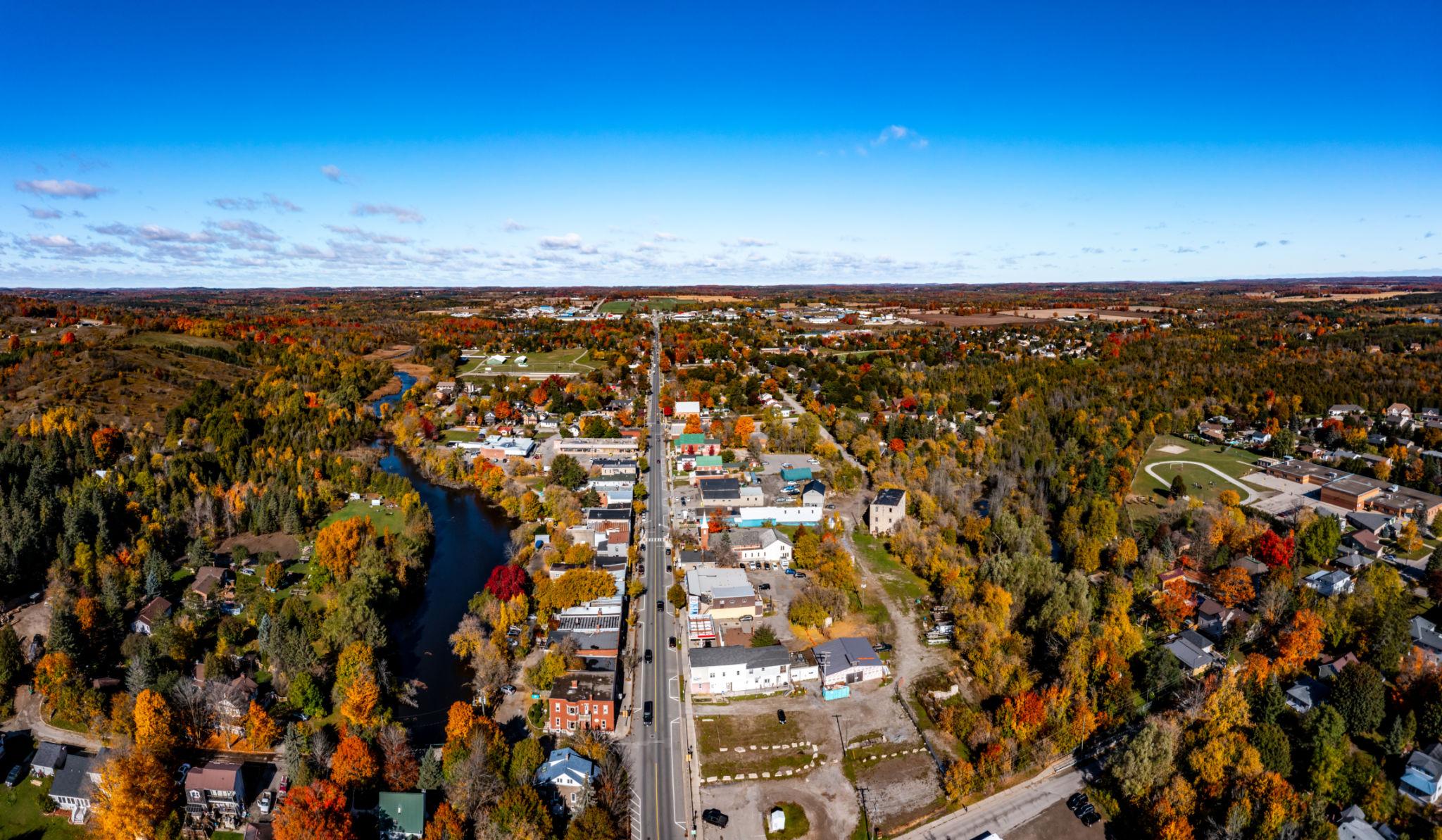
Zoning and planning constraints can defy intuition. The Grand River Conservation Authority floodplain overlays portions of Centre Wellington and Mapleton. Source Water Protection policies affect severance and site alterations in several townships. An appraiser who does not check these overlays might miss external obsolescence affecting what at first looked like a routine warehouse.
On the retail side, independent operators dominate many main streets. That means fewer corporate covenants and more one-off lease terms. For a neighborhood plaza in Fergus, cap rates may sit higher than for a grocery-anchored center in Guelph, even when occupancy is strong. In the last few years, I have observed cap rates range from the mid 6s to low 8s for unanchored strip centers in the county, widening when leases are short, expense recoveries are weak, or deferred maintenance is evident. The spread between asking and achieved rents can be real in smaller markets, so appraisers need actual rent rolls and estoppels, not assumptions.
Industrial rents have moved up since 2021, then plateaued or eased modestly with rate hikes. By mid 2025, light industrial asking rents in the county are commonly in the low to mid teens per square foot net near the 401 corridor, and single digits to low teens in more northern townships, depending on clear height, loading, and yard space. This dispersion is exactly the kind of detail an appraiser should quantify for you.
Agricultural adjacency complicates commercial land value. A parcel designated for future employment along a county road might look simple on paper, until you discover hauling routes, aggregate resource areas, or minimum distance separation requirements tied to livestock operations nearby. Commercial land appraisers in Wellington County worth their fee will check not just the official plan and zoning, but also county-wide constraints, conservation authority mapping, and any site-specific agreements.
Appraisal versus property assessment
Clients often ask why their commercial property assessment in Wellington County, used for municipal taxation, diverges from a current market appraisal. In Ontario, the Municipal Property Assessment Corporation, or MPAC, sets assessed values for tax purposes. MPAC uses mass appraisal methods with a legislated valuation date, and it updates on a province-wide cycle. A CUSPAP-compliant appraisal, by contrast, targets a specific date with property-level data and the best available market evidence. The two can be several years and several market turns apart.
If your property taxes feel high, an independent appraisal can support a Request for Reconsideration to MPAC or an appeal to the Assessment Review Board, but your appraiser’s mandate, scope, and valuation date must match the assessment context. I have seen owners throw money at an appraisal only to learn the MPAC base year was two cycles back and their report did not address MPAC’s model. A careful appraiser clarifies this at engagement, and can produce a limited scope report tailored to assessment evidence if that is your goal.
When you need a commercial land specialist
There is a difference between valuing an income-producing building and a raw or partially serviced site. Commercial land appraisers in Wellington County look closely at:
- Servicing status and credible timelines for water, sanitary, storm, and road upgrades.
- Precedent land sales analyzed on a per acre, per net developable acre, or per buildable square foot basis, depending on the highest and best use.
- Development charges, parkland dedication, site plan securities, and off-site cost sharing agreements.
- Constraints like hydro corridors, natural heritage features, and easements, which change the developable area and the density that can be supported.
- Market depth for the intended end product, whether industrial condos, flex space, or small-format retail.
A land appraisal often begins with a yield study or massing test. For example, a 5 acre employment parcel in Puslinch with 60 percent site coverage may support roughly 130,000 square feet of building area, but constraints like stormwater ponds or municipal setbacks can pull that down to 100,000. That change can erase hundreds of thousands of dollars in value once construction and soft costs are modeled against achievable rents or sale prices.
Ordering the appraisal, the right way
Strong outcomes start with a clear scope. Commercial appraisal companies in Wellington County will ask about the purpose of the report, the intended users, the property interest appraised, and the valuation date. Be precise. Financing at a Schedule I bank requires a narrative report with sales and income approaches, signed by an AACI, P.App, with the lender named as an intended user and a reliance letter if policy demands it. An internal decision memo for a private lender might accept a shorter format, but you still want CUSPAP compliance for credibility and insurance.
State any special issues up front. Environmental concerns, partial interests, encroachments, or planned capital expenditures can make a material difference. If the property spans multiple PID or PIN numbers, say so. If you expect a re-zoning, provide documentation, not assumptions. I have seen valuations deflate by 10 to 20 percent when permits or minor variances assumed to be routine met unexpected objections at committee or from the conservation authority.
How to choose among local providers
Not every firm is built for every task. Some teams in the region do a high volume of lender-driven work and are efficient on standard industrial buildings, while others specialize in development land or complex income properties. Geographic coverage matters too. If you are in Arthur or Harriston, ask who has appraised there in the last year, not five years ago.
Speed and price are visible, but they should not be the only filter. Experience with the specific asset class, familiarity with township and county planning files, and a track record with your lender or court can save you far more time and money than a quick turnaround on a thin analysis.
Here is a short hiring checklist that keeps the selection grounded in what actually matters:
- Confirm the signatory holds the AACI, P.App designation and that the firm follows CUSPAP. Ask for the last update date they operate under.
- Ask for two recent assignments in the same township and asset type, with client names redacted. You want to see local comparables and well-supported cap rates or land metrics.
- Clarify whether the quote includes both the income and direct comparison approaches, a site visit, and any reliance letters or updates your lender might require.
- Request a realistic turnaround time and what drives it, including access to tenant documents, environmental reports, and municipal files.
- Determine independence and conflicts. If the firm is already retained by the other party or has a contingent fee structure, move on.
Documents that make the appraiser faster, and your bill lower
You can trim days off the process and avoid change orders by preparing a focused set of documents. These are the ones that consistently help:
- Current rent roll with lease terms, options, escalations, and recovery structures. Include any inducements or abatements.
- Copies of major leases and any estoppel certificates available. For single tenant buildings, provide the full lease.
- Last two years of operating statements, broken out by recoverable and non-recoverable expenses, and a current budget if available.
- Recent capital improvements, with costs and dates. Roof replacements, HVAC overhauls, and parking lot work are common value drivers.
- Municipal documents: zoning verification, site plan approval, variances, and any correspondence with the conservation authority.
When owners send a tidy package on day one, I see reports finish a week sooner, and cost less by a few hundred to a thousand dollars because there are fewer gaps to chase and fewer assumptions to test.
Timelines, fees, and what moves them
For a straightforward commercial building appraisal in Wellington County, expect a narrative report within 10 to 15 business days after the site visit, assuming your documents arrive promptly. Tight market windows or lender-driven closings sometimes demand five business days. You can often get there with a rush fee, but only if tenant access and municipal files are available quickly.
Fees vary with complexity and risk. A small industrial condo near the 401, single tenant, clean environmental file, might land in the 3,000 to 5,000 dollar range. A multi-tenant retail plaza in Fergus with blended recovery structures and older leases could push to 5,000 to 8,000. Development land with uncertain servicing, or special-purpose properties like food processing or recreational facilities, often exceed 10,000 when modeling and stakeholder interviews are necessary. Updates and reliance letters cost less but still take time, particularly if market conditions have shifted since the original report date.
Each firm prices somewhat differently. Some fold one round of lender questions into the base fee. Others charge hourly for any post-delivery work. Ask about this upfront so you are not surprised when credit, risk, or legal departments send a second wave of queries.
Reading, and using, the finished report
Do not just flip to the value page. Read the highest and best use section closely. If the appraiser concluded that the current use is interim because of a realistic zoning path to a better use, that affects your risk. Check the rent comparables, especially the adjustments. Are they using Guelph comparables to support a cap rate in Elora without discussing the spread? Do the expense recoveries match your leases, or did the appraiser default to a triple net assumption?
For income properties, pay attention to stabilized assumptions. If the appraiser applies a 5 percent vacancy allowance in a market with long-term full occupancy and thin new supply, ask why. On the other hand, if you know a tenant is unlikely to renew, a higher stabilized vacancy or a near-term downtime assumption can be more defensible than ignoring the risk.
When the report supports financing, ensure your lender is listed as an intended user or is covered by a reliance letter. If you plan to share the report with a third party beyond the scope, ask the appraiser for consent first. CUSPAP restricts distribution for good reasons, including professional liability and misinterpretation risks.
For property tax matters, tie the valuation date and method to MPAC’s base year and approach. If you want to support a Request for Reconsideration, ask your appraiser to assemble evidence that addresses MPAC’s model, not just a current value opinion. Sometimes a short, targeted critique of comparables used by MPAC beats a full narrative report in both efficacy and cost.
A few field notes
A small plaza in Fergus sold a few years ago with a headline cap rate in the high 6s. The buyer accepted a broker-provided pro forma with tidy expense recoveries. The appraiser on the lending file requested leases and found that two tenants had gross leases with ambiguous capital expense language, and the roof was near end of life. After normalizing expenses and including a capital reserve, the effective cap rate moved into the low 7s. The lender adjusted proceeds, and the buyer renegotiated a small price reduction. Everyone still closed. The point is not that brokers mislead, but that documents matter and small clauses swing value.
In Puslinch, an owner-occupied light industrial building near the 401 was being refinanced. A national model placed it at a cap rate over 7 percent because it pegged the asset as a small-market property. The local appraiser reviewed recent sales along the corridor, confirmed rents achievable for a hypothetical lease-up, and justified a cap rate in the mid 6s. The bank moved the deal from a policy exception to standard approval. That spread on cap rate translated into hundreds of thousands of dollars in additional lending capacity.
On a 4 acre commercial land parcel outside Erin, the owner assumed full site coverage for valuation. A quick site walk revealed a drainage swale and a hydro easement that cut the developable area by about 25 percent. After accounting for stormwater requirements and a likely right-in, right-out access, the appraiser shifted the highest and best use from a multi-tenant retail concept to a single-tenant building with yard. The value changed substantially. That early adjustment saved the owner from overcommitting design fees.
Edge cases and judgment calls
Appraisers are paid to exercise judgment. Sometimes the evidence stack does not point cleanly to a single number. When a property has a major tenant rolling over inside of 12 months, you are not just pricing a building, you are pricing lease-up risk. In Wellington County, the pool of replacement tenants for specialized space can be shallower than in large metros. A defensible report will often apply scenario analysis or explicitly adjust the cap rate and downtime to reflect that.
Environmental reports do not all carry the same weight. A Phase I ESA older than a year may not satisfy a lender. If a Phase II has recommendations outstanding, the appraiser may need to factor remediation costs or stigma, even when you have budgeted for the work. That is not punitive, it is prudent.
Historic buildings add charm, foot traffic, and maintenance risk. An Elora building with heritage designation can outperform peers on rent per square foot because of location and appeal, but the obligations around alterations, windows, and facades may push capital reserves higher. An appraiser who ignores those reserves inflates value. An appraiser who overweights them may understate the rent premium. The right answer depends on the specific block, the tenant mix, and owners’ investment horizons.
Finally, note that cap rates in smaller markets widen faster than they tighten when interest rates move. An appraiser who blindly ports last year’s cap rate into this year’s report does you a disservice. Ask for sensitivity testing. A 50 basis point swing on a 2 million dollar net operating income is a million dollar https://judahkdqr299.raidersfanteamshop.com/commercial-property-appraisers-in-wellington-county-questions-to-ask-before-you-hire value shift. Seeing that exposure on paper helps you make better choices, whether you refinance now or wait a quarter.
Bringing it all together
Hiring for commercial building appraisal in Wellington County is about fit, evidence, and clarity. The right professional understands both CUSPAP and the county’s planning reality, from source water maps to the way Guelph’s economics filter into Puslinch and Guelph/Eramosa. They use local comparables, defend rent and cap rate assumptions, and are transparent about uncertainties.
If you need help on a purchase, pick a firm that can move quickly, yet still call your tenants and check municipal files. For financing, confirm your lender accepts the firm and that you will get any required reliance letters. For development land, favor commercial land appraisers in Wellington County who bring planning and servicing expertise, not just sales grids. For disputes around commercial property assessment in Wellington County, align the scope and valuation date with MPAC’s framework so your evidence counts.
You are not only buying a number. You are buying the reasoning behind it, portable across lenders, partners, and sometimes tribunals. The best commercial building appraisers in Wellington County make that reasoning easy to follow, grounded in verifiable data, and tailored to the way this market really functions. That is how you turn a valuation into an advantage instead of a hurdle.