A Guide to Commercial Property Assessment in Huron County
Commercial investors like predictability, and few things rattle projections more than uncertainty about assessed value and taxes. In Huron County, Ontario, understanding how commercial property assessment and private appraisal work will save you time, temper surprises at renewal or sale, and sharpen negotiation in leases and financing. The county’s mix of lakeside tourism, small‑town main streets, light industrial, ag‑related services, and legacy infrastructure creates valuation questions that do not always fit neatly into big‑city models. The details matter: how rents are structured, how vacancy ebbs with the seasons, how grain prices swing service‑property demand, or how a single anchor tenant changes the risk profile on a block.
This guide walks through the assessment system used for taxation, what commercial building appraisal looks like for lending and transactions, how cap rates behave in a small market, and practical steps to challenge a number that seems out of line. The intent is straightforward: equip owners, buyers, and lenders to work effectively with commercial building appraisers in Huron County, and to know when to push back on an assessed value.
First, separate assessment from appraisal
The terms get used interchangeably, but in Ontario they refer to different processes, with different standards and outcomes.
Property assessment for taxation is handled by the Municipal Property Assessment Corporation (MPAC). MPAC assigns a Current Value Assessment (CVA) to each parcel, then municipalities set the tax rates. CVA is meant to reflect the price a property would sell for on the open market on a prescribed valuation date. As of 2024, Ontario’s province‑wide reassessment has been postponed several times, which means the base year for CVA remains 2016 unless the province announces a change. Even with that base year, MPAC updates values when properties change, for example after expansions, a change in use, or new construction. Assessments feed the property tax bill, and disputes go through the Request for Reconsideration process, then the Assessment Review Board (ARB) if needed.
Appraisal, on the other hand, is a private valuation prepared for a specific purpose: mortgage financing, purchase due diligence, litigation, financial reporting, or expropriation. Commercial building appraisal in Huron County is typically completed by designated professionals, often AACI (Accredited Appraiser Canadian Institute) members through the Appraisal Institute of Canada. Lenders, courts, and accountants rely on these opinions because they are supported by market evidence, clear assumptions, and standardized methodology. If you hear someone say “we need an appraisal for the bank,” they are referring to this private, purpose‑built report, not the MPAC assessment.
You may need both. One dictates your tax bill; the other underwrites your deal.
Huron County’s commercial landscape, in valuation terms
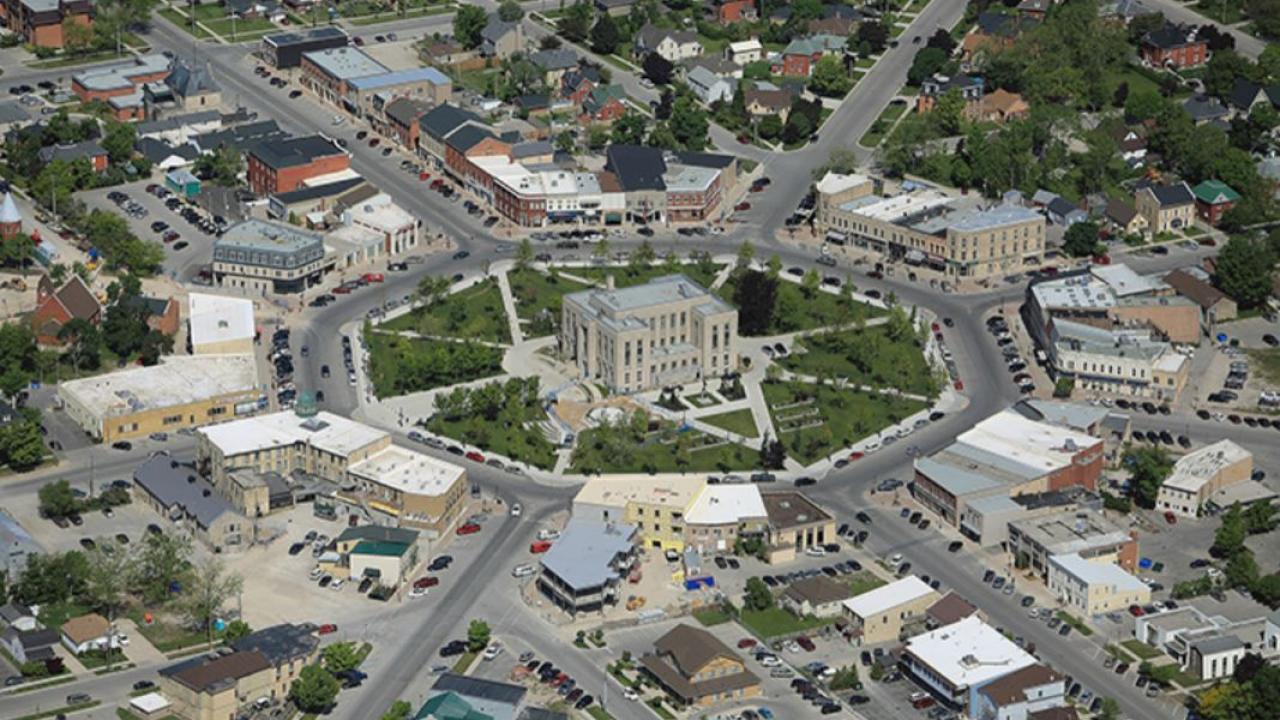
The county is not homogeneous. The approach a valuer takes for a Goderich main‑street mixed‑use building will not match the approach for a contractor’s yard near Exeter, a motel in Bayfield, or a warehouse serving ag suppliers in Hensall. Understanding local sub‑markets helps set realistic expectations.
- Downtown strips in places like Goderich, Clinton, Wingham, and Seaforth tend to feature older, mixed‑use buildings. Street‑level retail rents often tie to foot traffic and tourist seasons, especially near the lake. Upper floors may be residential, office, or vacant, and their condition varies widely.
- Light industrial and service‑commercial clusters sit along highway corridors and at town edges. Lease structures are commonly net or semi‑net, with tenants covering some or all of taxes, insurance, and maintenance.
- Hospitality properties leverage summer peaks and shoulder seasons. Daily rates, occupancy swings, and the cost of capital improvements make the income approach complex because one bad season can skew a single year’s results.
- Waterfront influence is real but uneven. Proximity adds value for restaurants and boutiques; it may not move the needle for a parts distributor whose trucking access and yard utility matter more.
- Agricultural service properties, including grain elevators, equipment dealerships, and ag‑supply outlets, respond to crop cycles and commodity prices. Land utility, access for heavy vehicles, and specialized improvements dominate the value conversation more than a polished showroom.
Commercial land appraisers in Huron County also contend with limited truly comparable vacant land sales. Buyers often trade improved properties and then demolish or reconfigure them, so isolating land value requires careful adjustment. Where municipal servicing is partially available, the timing and cost of full servicing will materially affect land value.
How commercial property assessment works in practice
With MPAC, three valuation approaches are in play: cost, income, and direct comparison. For most income‑producing assets, MPAC uses an income approach with standardized inputs for rents, vacancy, expenses, and cap rates at the property class level. For special‑purpose assets, they may lean on cost less depreciation. For small retail or office condos, the direct comparison approach may appear in the file.
Owners often bristle at standardized inputs. The building you renovated with high‑efficiency systems and premium storefront glass may be modeled with the same rent and expense ratios as a tired block across town. MPAC has to manage thousands of properties, so uniformity is inevitable, but it is not immovable. Supply them with credible data, and you can move the needle.
Three practical points:
- Assessment is not annual market value in the literal sense. It reflects the base year, adjusted for changes, and modeled parameters. Your current sale price might be higher or lower without establishing an error in the assessment.
- MPAC’s “equity” test matters. If the model treats your property materially differently than similar properties, an appeal gains traction even if the overall market moved up.
- Documentation wins. MPAC values usable, verifiable data even when it reduces assessed value, especially if the file can be closed with a clean rationale.
Private appraisals for financing or transactions
Commercial building appraisers in Huron County can be more granular than an assessor because they have one subject and one purpose. The report’s content will vary based on scope, but three themes recur.
First, supportable rents. In small markets, a single outlier lease can distort averages. A seasoned appraiser will map each comparable to the subject’s location, size, exposure, parking, tenant covenant, and finish level. They will reconcile asking rents that sat vacant for months versus signed deals with tenant improvement allowances. If a building has upper‑floor residential units, residential rent control rules, turnover, and utility splits influence stabilized income.
Second, cap rate selection. There is no published cap rate for “Main Street, Huron County” that a lender can rely on blindly. Expect the appraiser to explain how they adjusted urban or regional data for liquidity, property age, and concentration risk, then triangulate with local sales even when those trades are sparse or privately negotiated. They will also test sensitivity: what if the market expects 25 to 50 basis points more for a secondary location with small‑tenant rollover risk?
Third, the cost approach is not dead. For special‑use assets, older buildings with deferred maintenance, or properties with limited rent comparables, replacement cost new less depreciation can be a key check. In rural contexts, land extraction can be tricky, and obsolescence is a judgment call. Experience matters here.
When the bank’s number and MPAC’s number disagree
It is common to see a private appraisal that differs by 10 percent or more from MPAC’s CVA. The reasons vary. Perhaps the MPAC model uses a higher market rent than the subject can actually achieve today, or the appraiser applies a higher cap rate to reflect leasing risk. Perhaps the appraisal reflects required capital expenditures in the first three years, and MPAC’s model does not.
If your plan is to use the appraisal to support an assessment reduction, be realistic. MPAC is not obligated to accept a private appraisal because it is written for a different date and purpose. That said, the rent roll, actual expense statements, leases, and tenant inducement details included in a private report can support a better conversation with an assessor. Use the narrative and data, not just the conclusion.
Income approach, with local realities
On paper, the direct capitalization method is simple: Net Operating Income divided by a capitalization rate equals value. The difficult part is getting to a credible, stabilized NOI that a prudent buyer would underwrite in Huron County.
Consider a small retail strip on a corner near a highway in Exeter. Leases are net, with tenants paying their proportionate share of taxes, insurance, and common area maintenance. One unit is leased to a long‑standing service business at 16 dollars per square foot, another to a new café at 20 dollars with three months of free rent and a landlord contribution to a patio. Two units are month‑to‑month at discounted rates after COVID, and one is vacant. Annualized as‑is income paints one picture. A stabilized view, factoring back the free rent, adjusting the discounted month‑to‑month spaces to market, and adding a realistic vacancy allowance based on the last three years, paints another. A cautious investor might also include a reserve for roof and parking lot work in year two.
A credible appraiser will show both the as‑is cash flow and a stabilized view, then make a case for which better reflects value to a typical buyer, supported by market vacancy data, lease‑up timeframes, and actual capital items. For a lender, this nuance can be the difference between full proceeds and a haircut.
Sales comparison without perfect comps
In Toronto or London, you can find a dozen clean sales within a few kilometers of a subject to anchor a price per square foot. In Huron County, you might have three, spread across two years and several towns, each with quirks. One was a related‑party sale at a nominal price with a leaseback, one included extra land, and one had a distressed seller who wanted to exit before winter.
Experienced commercial appraisal companies in Huron County parse these transactions instead of discarding them outright. They verify who paid what net of tenant inducements and chattels, adjust for building condition and deferred maintenance, and then explain how a smaller data set still supports a reasonable range. They will also triangulate with regional data, explaining why a sale in St. Marys or Listowel is or is not comparable based on buyer pools, economic drivers, and exposure. The key is transparency: show the reader how you moved from raw sales to a conclusion.
Cost approach where utility leads the value story
For assets tied closely to their improvements, like a contractor’s shop with multiple drive‑through bays, a secure yard, and an oversized electrical service, the cost approach can anchor value. Buyers ask, what would it cost to replicate functional utility on a similar site, then discount for age, wear, and layout inefficiencies? If replacement cost new is 225 to 275 dollars per square foot for that type of building in the region, and the subject is 20 years old with some obsolescence, the depreciated cost might set a floor that a cautious lender prefers to give weight.
The biggest judgment calls are often in physical deterioration and functional obsolescence. A six‑bay shop with two bays trapped by support columns may not earn six‑bay revenue. An office built into the shop that eats floor area but offers little rentable value will attract a deduction. Appraisers spell out these calls because they move the number more than small swings in unit costs.
Special cases: motels, marinas, and seasonal retail
Hospitality income in Huron County is seasonal. Occupancy that averages 45 to 55 percent annually might run 80 percent or more in July and August, then sag in late fall. Daily rates follow the same curve. A single 12‑month income and expense statement can mislead if an unusual event hit the period. A wildfire haze that kept visitors away for two weeks, a construction project blocking access, or a surge in local festivals will all ripple through.
For such properties, appraisers often use a three‑year stabilized analysis, adjusting extraordinary items and normalizing wages, utilities, and marketing costs. They pay attention to online reviews and repeat‑guest data because management quality shows up in net operating margins. They also separate real estate value from business value where required. A motel with a thriving event and tour business may command a price that includes more than real property. Lenders and assessors treat that distinction differently, so the appraisal must be explicit.
Preparing for an assessment review or appeal
A short, focused preparation saves weeks of https://blogfreely.net/geleynpmom/avoiding-common-pitfalls-in-commercial-building-appraisals-huron-county back‑and‑forth with MPAC. Use this checklist before filing a Request for Reconsideration.
- Gather the last two full years of operating statements, broken down by category, and the current year to date.
- Assemble all current leases, including amendments, rent abatements, tenant improvement allowances, and renewal options.
- Document capital expenditures and timing, such as roof replacement, HVAC upgrades, or façade work.
- Summarize occupancy by unit and by month, noting move‑ins, move‑outs, and marketing time for any vacancy.
- Take current, well‑labeled photos of key areas, including mechanical, loading, parking, and any deferred maintenance.
Be concise. MPAC staff appreciate a clean package that lets them plug credible numbers into their model and explain any change to their internal reviewers.
Appeal routes and timelines, without the jargon
If your Request for Reconsideration stalls, the next step is the Assessment Review Board. Professional representation helps, but many owners handle smaller files themselves, especially for straightforward income‑property issues.
- File on time. Deadlines matter. Missing one can end your chance for the year.
- Keep the discussion evidence‑driven. Saying “taxes went up too much” is not an argument. Showing a stabilized rent roll, vacancy history, and market rent comparables is.
- Aim for equity and accuracy. Even if the county’s overall market climbed, you can argue that your specific inputs are wrong, or that similar properties are assessed more favorably.
- Consider settlement. Many cases resolve through discussion before a full hearing, with both sides avoiding the cost and time of a formal decision.
Owners with portfolios across towns like Goderich, Clinton, and Wingham sometimes find that an equity argument, supported by a small matrix of comparable assessments per square foot of area, is more persuasive than a dense narrative. Use both when appropriate.
Working with commercial appraisers: how to get a reliable report
Commercial appraisal companies in Huron County range from solo practitioners with deep local experience to regional firms with broader datasets. Designation and licensing are the baseline. From there, practical collaboration produces better results.
- Share your narrative, not just files. Explain tenant profiles, pain points, and recent negotiations. An appraiser who understands why a space sat empty can pick better comparables.
- Clarify the assignment purpose and timing. Financing for construction, refinancing stabilized income, shareholder buyout, and litigation each require different scopes and assumptions.
- Flag constraints early. Environmental issues, encroachments, floodplain mapping, or unusual easements all affect marketability and value. Surprises late in the process create delays.
- Ask for sensitivity where it matters. If your loan covenants are tight, a simple cap rate and rent sensitivity table helps you plan for downside scenarios.
If you are hiring for commercial land, ask the firm about their track record extracting land value from improved sales in small markets. The work is different from appraising a leased strip plaza.
Cap rates, liquidity, and market sentiment in a small market
Cap rates in Huron County typically sit higher than in larger urban centers, reflecting liquidity, tenant concentration risk, and slower leasing velocity. The premium varies by asset class and quality. A well‑leased grocery‑anchored plaza with strong covenants will compress the premium. A mixed‑use main street building with second‑floor vacancy and a family‑run tenant at street level will widen it.

In practical terms, a 50 to 150 basis point spread over a comparable urban asset is common, with outliers. Investors also look through cap rates to the tangible story: replacement cost relative to price, tenant stickiness, and the durability of trade areas that draw from broad rural catchments. When interest rates rise, small markets can see more pronounced price movements because a thinner buyer pool pulls back at once. Conversely, when rates pause and net yields finally look attractive again relative to alternatives, the rebound can be swift as sidelined local buyers act.
Land value puzzles: frontage, servicing, and use
Commercial land value in Huron County turns on practical questions.
How many entrances will the county or municipality permit on a given frontage? A deep site with one limited access point can underperform a smaller site with safer, signalized access. What servicing is in place today, and what is realistically achievable? A site “near services” still needs the cost and time to bring water, sewer, or storm to the lot line, and off‑site works can be the silent killer in a pro forma.
Zoning flexibility matters because exit options lower risk. A parcel that allows a mix of commercial and light industrial uses will attract a wider buyer pool than a narrow commercial designation beside residential. Where the official plan is in flux, uncertainty will suppress value until approvals clarify. Here, commercial land appraisers in Huron County spend as much time reading planning documents and interviewing municipal staff as they do crunching sale prices.
Taxes, leases, and pass‑throughs: read the fine print
Many Huron County leases are net or semi‑net, but the definitions of additional rent vary. A small landlord who self‑manages might underrecover common area maintenance because they do not charge for coordination time, after‑hours snow calls, or bank fees. If the appraisal assumes market‑typical recoveries but the leases cap increases or exclude key items, the effective NOI will be lower than the model. On the flip side, if tenants are triple net and property taxes fall after a successful appeal, NOI rises without changing base rent.
Ask your appraiser to review a sample reconciliation statement and lease clauses that cap controllable expenses or assign unusual costs to the landlord. These mechanics are valuation levers.
Data scarcity and how professionals work around it
Unlike major metros with constant trades, Huron County often presents sparse data. Good commercial building appraisers do six things to compensate: they verify every sale they can with participants, they cross‑reference listing histories for withdrawn or expired deals, they adjust regional comps with disciplined reasoning, they collect rent data from both sides of transactions, they keep running logs of lease‑up times by property type, and they document every assumption that bridges gaps. The report will admit uncertainty where it exists and will explain why the concluded value sits where it does within a range.
That transparency is what lenders look for. It is also what persuades a buyer or seller to accept a number that is not the one they hoped to see.
Common pitfalls and how to avoid them
Owners often underestimate the value drag of deferred maintenance in older main‑street buildings. A roof near end of life, knob‑and‑tube remnants, marginal insulation, or outdated electrical panels will show up in cap rate and buyer discount, even if tenants are paying rent. Another frequent blind spot is parking. A charming storefront without adequate parking will limit tenant mix, which an appraiser reflects in achievable rent and leasing risk. Finally, do not ignore small zoning or encroachment issues. A canopy that projects into a right‑of‑way, a sign without a permit, or a rear fence on municipal land can spook cautious buyers more than you expect.
On assessment, the biggest misstep is filing a request without organized support. Broad complaints go nowhere. Concrete, current information wins respect and results.
Selecting the right partner in Huron County
Whether you are seeking commercial building appraisal in Huron County for financing or considering a challenge to your commercial property assessment in Huron County, choose expertise that fits the asset and the assignment. For an industrial shop, look for portfolio experience in similar buildings across small Ontario markets. For a motel, ask about income normalization and business separation. For bare land, probe their approach to planning constraints and servicing.
Commercial appraisal companies in Huron County earn repeat work by giving clear assumptions, defending them with evidence, and delivering on time. That is what your lender, your buyer, and your tax adviser need, too.
A brief example: reconciling three approaches on a small plaza
Take a five‑unit plaza on a secondary arterial in Wingham, 8,500 square feet, 95 percent occupied, two local service tenants, one national courier storefront, two food operators. Leases are net with a historical 3 percent vacancy. Market rents run 16 to 20 dollars per square foot, tenants pay taxes and common expenses, and landlord covers roof and structure.
Income approach: Stabilized NOI after a 3 percent vacancy and reserves is 155,000 to 165,000 dollars depending on a modest rent reset on rollover units. Capitalizing at 7.5 to 8 percent yields a value range of roughly 2.0 to 2.2 million dollars.
Sales comparison: Two nearby sales, adjusted for age and tenant mix, suggest 230 to 255 dollars per square foot, which translates to approximately 2.0 to 2.17 million dollars. A third regional sale in Listowel at a lower cap rate is adjusted upward for Huron County’s liquidity and tenant profile, keeping the subject closer to the first two.
Cost approach: Replacement cost new at 240 dollars per square foot less depreciation at roughly 25 percent for age and some functional items indicates 1.53 million dollars, then add land at 400,000 to 500,000 dollars based on adjusted local land references. The resulting 1.93 to 2.03 million dollar range acts as a floor.
A reasoned reconciliation would likely settle near the income approach midpoint, because buyers transact income, not replacement cost, and the sales data corroborate that band. A lender will test downside scenarios, but if lease terms are strong and rollover risk manageable, the deal underwrites.
Final thoughts for owners and buyers
Commercial property in Huron County rewards close attention to leases, local demand drivers, and the quirks of small‑market comparables. Treat MPAC’s model as a starting point, not a verdict. When hiring, prefer commercial building appraisers in Huron County who explain their reasoning in plain language and back it with documents you can hand to a banker or a board. And when assessing opportunity, judge each asset on its cash flow resilience, not just its charm or headline cap rate.

If you prepare good information, ask sharp questions, and work with professionals who know the region, you will make better decisions. That is the margin that protects returns when markets shift and helps you sleep when they do.